Despite a phase IIa failure in 2018 for lupus, Biogen Inc. and UCB Inc. maintained their collaboration and now have new positive data for their anti-CD40L candidate. Top-line phase III data show dapirolizumab pegol, along with the standard of care (SOC), met the primary endpoint in demonstrating an improvement in moderate to severe systemic lupus erythematosus compared to placebo and SOC at 48 weeks.
The specter of elevated liver enzymes, a known problem with the drug class, became a topic of talk with regard to Sanofi SA’s tolebrutinib, the central nervous system-penetrating Bruton's tyrosine kinase (BTK) inhibitor for multiple sclerosis (MS). Meanwhile, another player in the space, Immunic Inc., has caught the eye of Wall Street lately.
Three biopharmas debuted on Nasdaq Sept. 13, raising a combined $703 million for two Massachusetts-based companies focused on bifunctional antibodies for autoimmune diseases and cancer, and one Midwestern firm developing peptide therapies for endocrine and metabolic disorders.
A drive to overcome the limitations of traditional antibodies led Toronto-based scientists Jean-Philippe Julien and Bebhinn Treanor to work toward discovering a multivalent, multispecific platform to develop therapies that can reach difficult targets. As a result, through the support of VC firm Amplitude Ventures, Radiant Biotherapeutics emerged in 2020 armed with what has become its Multabody platform.
Candid Therapeutics Inc. launched with ex-China control of two bispecific T-cell engager antibodies that it plans to develop for autoimmune diseases. The San Diego-based company will start off with a pocketful of cash, having raised over $370 million for the development of the in-licensed candidates.
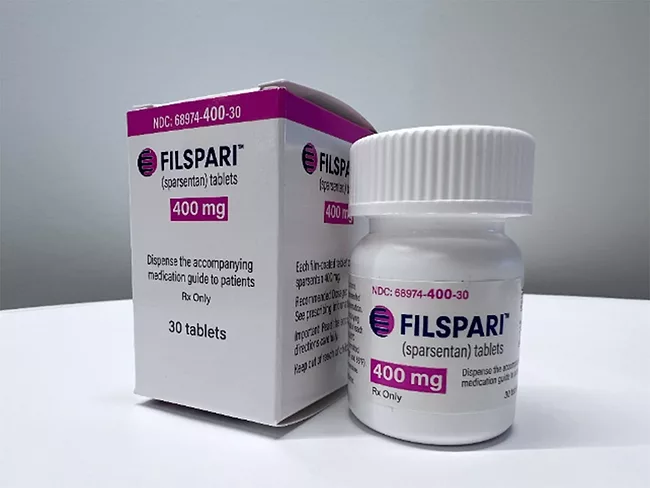
With full approval from the U.S. FDA in hand for Travere Therapeutics Inc.’s Filspari (sparsentan) to slow kidney function decline in adults with primary IgA nephropathy (IgAN) who are at risk of disease progression, eyes turned to future prospects as well as how a revised risk evaluation and mitigation strategies (REMS) program might shake out. During a conference call hosted by Travere, Leerink analyst Joseph Schwartz wanted to know what changes might be made, and if the regulator’s decision might “actually be an entire removal” of the REMS.
In a deal that brings $60 million in cash and equity up front, plus up to $575 million in milestone payments, Shanghai-based Epimab Biotherapeutics Inc. and San Diego-based Vignette Bio Inc. entered a licensing agreement for Epimab’s BCMA-targeting T-cell engager, EMB-06, for autoimmune disease.
Advanz Pharma Ltd. has won a stay on the withdrawal of its primary biliary cholangitis (PBC) drug, Ocaliva (obeticholic acid), after the European Commission (EC) said on Sept. 3 that the conditional marketing approval should be revoked. Following that, London-based Advanz launched a legal challenge, announcing on Sept 5 that the General Court of the EU has temporarily suspended the EC’s decision. As a result, the conditional marketing authorization for Ocaliva remains in place until further notice from the court, and the 7,000 existing patients – and new ones – will still have access to the farnesoid X receptor agonist.
Navigator Medicines Inc. is charting a course through the autoimmune disease drug landscape, having raised $100 million in a series A funding round to advance an OX40 ligand (OX40L)-targeted portfolio licensed from South Korea’s Imbiologics Corp.
Since the publication of The Hallmarks of Aging in 2013, aging research has exploded. The field now has more than 300,000 articles on the biological signals of the effect of time on the body. What would Marty McFly, the legendary character from the Back to the Future saga who traveled with his DeLorean time machine from the ‘80s to the ‘50s, think if he visited 2024 and saw laboratories experimenting with techniques to turn back the biological clocks of cells or increase the lifespan of rejuvenated mice?

 RSS
RSS