With $50 million in hand from Flagship Pioneering, Abiologics Inc. is pairing generative artificial intelligence with high-throughput chemical protein synthesis to attack oncology and immunology indications with Synteins, synthetic proteins that represent a new class of programmable medicines. Avak Kahvejian, co-founder and CEO of Abiologics and general partner at Flagship, told BioWorld that Abiologics stands “at the precipice of a completely new modality.”
The 2024 meeting of the International AIDS Society (IAS), which is being held in Munich this week, began with the announcement of another curative bone marrow transplant. The new case brings the total number of patients cured of HIV via a bone marrow transplant up to 7 since “Berlin patient” Timothy Ray Brown became the first such person in 2007.
Artiva Biotherapeutics Inc. raised $167 million through an upsized IPO, with funds aimed at the development of its lead AlloNK program for systemic lupus erythematosus and other autoimmune indications. Just a few days ago, the San Diego based company had aimed to sell 8.4 million shares between $14 and $16 each, but it raised the number of shares offered to 13.92 million and lowered the price to $12 each. The upsize brings Artiva’s shares outstanding following the IPO to about 22.8 million, giving the company a market cap of $273.6 million based on the IPO price.
Autoimmune disease specialist Scirhom GmbH has raised €63 million (US$68 million) in a series A to take an antibody against iRhom2, an enzyme that regulates TNF-alpha secretion, into the clinic. The company has approval for a phase I trial in healthy volunteers that will start later this year, with plans for proof-of-concept trials in rheumatoid arthritis and inflammatory bowel disease to follow.
Cartesian Therapeutics Inc.’s phase IIb study of its lead candidate, Descartes-08, in treating generalized myasthenia gravis (gMG) hit its primary endpoint while the company also notched a $130 million private placement equity financing.
Alumis Inc. began trading (NASDAQ:ALMS) earlier this morning, with the company’s IPO debuting at $16 per share to raise $210 million, with another $40 million coming through a concurrent private placement at the same price. That was the lower end of its previously announced price range, which had stretched as high as $18 per share.
Two days before the PDUFA date, the U.S. FDA handed down a complete response letter (CRL) for Rocket Pharmaceuticals Inc.’s Kresladi (marnetegragene autotemcel), delaying potential approval of the lentiviral-based gene therapy as the first therapeutic option for leukocyte adhesion deficiency type I, a rare, inherited immune disorder. But the Cranbury, N.J.-based company has suggested that delay won’t be long, as the CRL requests only “limited” chemistry manufacturing and controls (CMC) information – additional CMC data were also cited as the reason for the three-month review extension earlier this year.
After a previous phase III failure, Savara Inc. kept at it and found success with molgramostim for the rare lung disease autoimmune pulmonary alveolar proteinosis. A second attempt, the pivotal phase III Impala-2 study of molgramostim, an inhaled form of recombinant granulocyte macrophage colony-stimulating factor for adults, hit its primary endpoint and left participants breathing easier. The results led Savara to say it would complete a BLA submission sometime in the first half of 2025, with filings in Europe and Japan to follow.
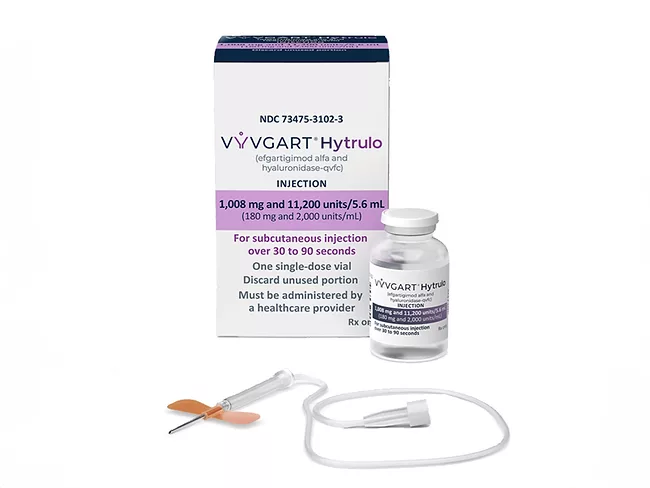
Argenx SE gained U.S. FDA approval of subcutaneously given Vyvgart Hytrulo (efgartigimod alfa and hyaluronidase-qvfc) for adult patients with chronic inflammatory demyelinating polyneuropathy (CIDP). The company’s stock (NASDAQ:ARGX) was up 11.7% to $440.59 at the close of trading June 24. About 24,000 people in the U.S. are being treated for CIDP, and patients are generally diagnosed between 40 and 60 years of age.
Coming off a presentation at the European Alliance of Associations for Rheumatology meeting, where a single report of disease recurrence in a lupus patient overshadowed promising early data for Kyverna Therapeutics Inc.’s autoimmune candidate, KYV-101, the Emeryville, Calif.-based company rallied on news of a case report describing the first use of the CD19-targeting CAR T-cell therapy in a patient with stiff-person syndrome, a rare, progressive neurological autoimmune disorder for which there is limited treatment.
 RSS
RSS