At BioEurope Spring 2026, pharma representatives and investors shared their thoughts about current and future landscapes of different disease areas, and on how to move toward success – both at the level of individual companies and for indications as a whole.
Two biotech and three med-tech companies are slated for Kosdaq debuts this month, signaling a potential rebound for Korea financings in 2026. Kanaph Therapeutics Inc. will open with a ₩40 billion (US$26.99 million) raise and Imbiologics Corp. will debut with ₩52 billion. Additionally, Mezoo Co. Ltd., Cosmo Robotics Co. Ltd. and Recensmedical Inc. will launch IPOs.
Two biotech and three med-tech companies are slated for Kosdaq debuts this month, signaling a potential rebound for Korea financings in 2026. Kanaph Therapeutics Inc. will open with a ₩40 billion (US$26.99 million) raise and Imbiologics Corp. will debut with ₩52 billion. Additionally, Mezoo Co. Ltd., Cosmo Robotics Co. Ltd. and Recensmedical Inc. will launch IPOs.
A review of 2025's noteworthy advances in medical research, including GLP-1 receptor agonists as anti-aging drugs, tumor-agnostic therapies and xenotransplants.
In October, the Nobel Committee awarded the 2025 Nobel Prize in Physiology or Medicine to Shimon Sakaguchi, Mary Brunkow and Fred Ramsdell for their discoveries in the field of autoimmunity. As has become typical for the scientific Nobel Prizes, the award-winning research is by now several decades old. But the discoveries were the basis for ongoing research into how to prevent autoimmunity that notched significant wins in 2025, in both basic research and in the clinic.
Investigators at the Netherlands Hubrecht Institute have developed a novel gut organoid model, and used it to gain insight into the functions on human microfold (M) cells. Their experiments, which were published in the Dec. 10, 2025, issue of Nature, showed that M cells present gluten-derived antigens to T cells, which suggests a role for this cell type in the onset of celiac disease.
Seventy-three pharmaceutical, biotechnology and medical device companies from mainland China filed for IPOs in Hong Kong this year, a review by BioWorld found. In the second half of 2025, 43 new securities reports were filed on the Hong Kong Stock Exchange, increasing from the 30 applications in the first half.
By transplanting a pig kidney into a brain-dead person, researchers have been able to conduct the first long-term study of the physiological processes occurring in both the transplant recipient and the pig organ for 61 days. The findings were published in the Nov. 14, 2025, issue of Nature in two papers – one focusing on physiological and immunological measurements, the other on multiomics.
South Korean researchers led by Lee In-suk of Yonsei University have reported the most complete oral microbiome catalog to date, with more than 72,000 genomes. Detailed in Cell Host & Microbe on Nov. 12, 2025, the database is expected to serve as a universal platform for academia and enable “precision microbiome medicine” for the industry, Lee told BioWorld.
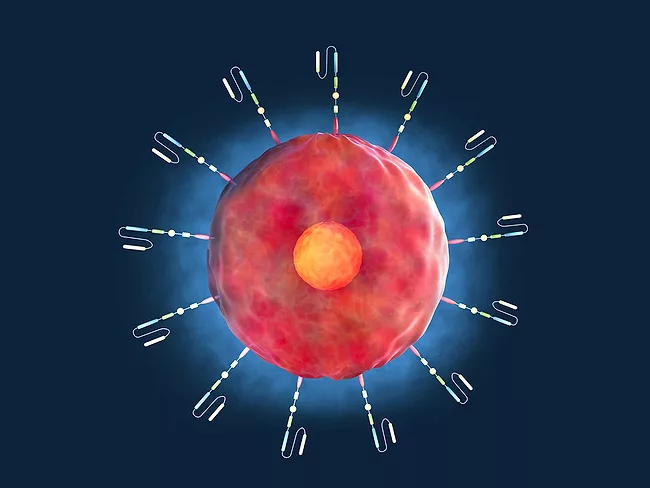
As the many challenges facing cell therapies are being addressed, the CAR T field continues to evolve beyond its original design of T cells engineered to target hematological malignancies. During the 32nd Annual Congress of the European Society of Gene and Cell Therapy (ESGCT), held in Seville Oct. 7-10, several studies showed how this technology is being redefined as programmable and adaptable immune cells with expanded functional versatility.
 RSS
RSS