Innovent Biologics Co. Ltd. presented data for IBI-3034, a chimeric Fc fusion protein comprising transmembrane activator and CAML interactor (TACI) and B-cell maturation antigen (BCMA) for the treatment of autoimmune diseases.
For 75 years, the standard tools for autoimmune disease have consisted of steroids, cytotoxics and broad biologics that tamp down the entire immune system. They can help, but they are rarely curative. “They’re blunt instruments,” Regcell Inc. CEO Mike McCullar told BioWorld. “They can’t distinguish good immune cells and bad immune cells,” which is why many carry black-box warnings and must be taken for years, sometimes for life.
Boehringer Ingelheim GmbH has licensed an unnamed small-molecule preclinical candidate from Kyowa Kirin Co. Ltd. in the autoimmune disease space in a deal worth up to €640 million (US$739 million).
Vera Therapeutics Inc.’s atacicept gained still more airtime at the Cantor Fitgerald health care conference held Sept. 4, and some on Wall Street believe the appetite for the BAFF and APRIL dual inhibitor could bode well for others in the same mechanistic space.
Kali Therapeutics Inc. has developed a novel T-cell engager (TCE) bispecific antibody, KT-502, targeting CD19 and CD3 for the treatment of autoimmune diseases, including systemic lupus erythematosus and rheumatoid arthritis.
Boehringer Ingelheim GmbH and Kyowa Kirin Co. Ltd. have announced that Boehringer Ingelheim has licensed a preclinical program from Kyowa Kirin to develop a potential first-in-class, small molecule for the treatment of autoimmune diseases.
Interleukin 1 receptor accessory protein (IL1RAP) is a receptor that activates signaling pathways triggered by IL1α/β, IL33 and IL36α/β/γ, which are involved in several autoimmune or inflammatory disorders, including psoriasis, gout or systemic sclerosis. Innovent Biologics Co. Ltd. presented data for their anti-IL1RAP antibody IBI-3011, a fully humanized IgG1 antibody targeting IL1RAP that blocks those pathways.
Shooting for further proof of durable, drug-free, disease-free remission with a single dose of KYV-101 in generalized myasthenia gravis, Kyverna Therapeutics Inc. plans to start phase III work by the end of this year. The Emeryville, Calif.-based firm rolled out positive interim results from the phase II portion of the registrational Kysa-6 clinical trial testing the drug, a fully human, autologous, CD19 CAR T-cell therapy with CD28 costimulation.
Qyuns Therapeutics Co. Ltd. signed a potential $1.07 billion license deal with Roche Holding AG, granting the latter exclusive rights to QX-031N – a human thymic stromal lymphopoietin and interleukin-33)-targeting bispecific antibody.
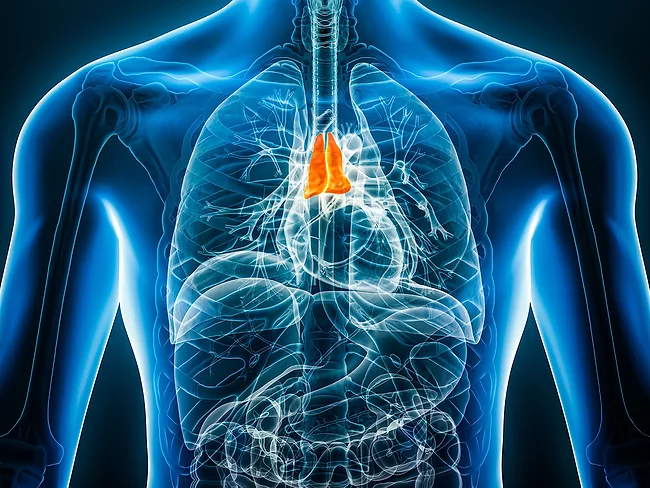
Zag Bio Inc. came out of stealth mode with $80 million in funding so far, including a recently closed series A financing, to develop its platform for autoimmune diseases using drugs targeted to the thymus where thymic regulatory cells are produced.
 RSS
RSS