Phase Scientific International Ltd. raised $34 million in a series A round to accelerate research and development of its early disease detection technology for multiple cancers, women's health issues, and infectious diseases.
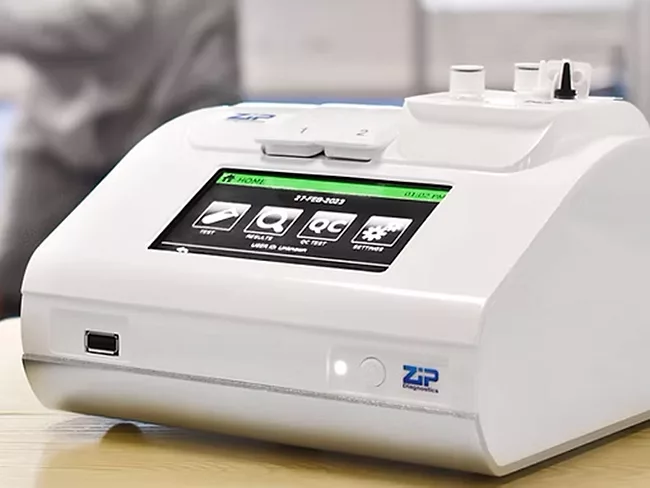
Zip Diagnostics Pty Ltd., Menzies School of Health Research and Axxin Pty Ltd., a Melbourne, Australia-based
diagnostic instrumentation manufacturer, partnered to develop a rapid diagnostic test for scabies, a skin parasite that affects more than 200 million people each year.
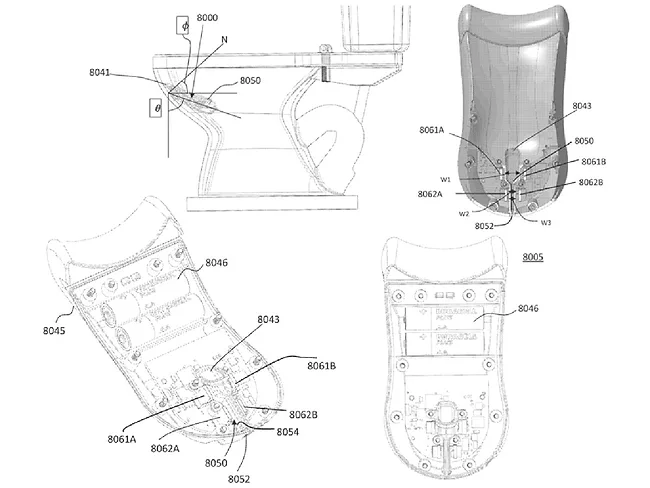
In what represents just the company’s third PCT filing, Houston-based Starling Medical Inc.’s co-founders, Hannah McKenney and William Hendricks, seek to gain further protection for their at-home urine diagnostic patient-monitoring platform that eliminates the traditional use of catching containers and dipsticks.
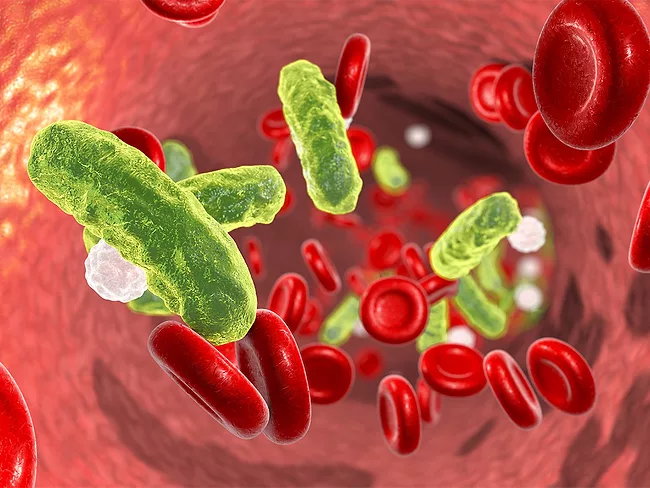
Deepull Diagnostics SL raised €50 million (US$56.93 million) in an oversubscribed series C financing round to complete clinical validation studies of its UllCORE diagnostic system for direct-from-blood rapid pathogen detection.
Harvard University has filed a lawsuit claiming the Trump administration’s freezing of its federal funding is unlawful and beyond the government’s authority. Announcing the move, Harvard’s president, Alan Garber, highlighted the impact of freezing $2.2 billion in grants – and the threat to freeze a further $1.1 billion – will have on the university’s biomedical research.
Researchers have developed a new compound that can prevent long COVID symptoms in mice that could lead to a future drug for the debilitating condition in humans. Developed by researchers at the Walter and Eliza Hall Institute of Medical Research (WEHI) in Melbourne, the world-first study found mice treated with the antiviral compound were protected from long-term brain and lung dysfunction, which are key symptoms of long COVID.
The EU’s Medical Devices Coordination Group (MDCG) issued another revision of its guidance for risk classification for in vitro diagnostics — the fourth such rewrite of a guidance that came out in 2020.
Compared to other forms of prevention, a unique issue for pandemic preparedness is that it is forever unclear what pathogen, exactly, the world needs to be prepared for. There are an estimated 300,000 viruses that infect mammals; add in birds, and the estimate grows to more than half a million. Some of those viruses are much greater threats than others.
Biomedical research seems like it should be the ultimate bipartisan issue. But under the Trump administration, unless and until Congress regains its will to make use of its constitutional powers, bipartisan support for research seems to be a thing of the past.
Peter Marks’ March 28 letter giving one week’s notice of his resignation as director of the U.S. FDA’s Center for Biologics Evaluation and Research (CBER) is sending more ripples of uncertainty throughout the industry. Marks, who has helmed CBER for nearly a decade, blamed his departure on recently confirmed Health and Human Services (HHS) Secretary Robert Kennedy, who has made a career out of his anti-vaccine stance.
 RSS
RSS