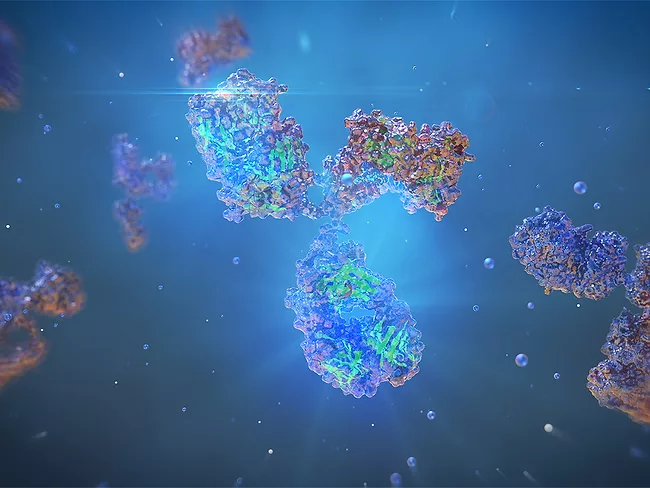
Elasmogen Ltd. has identified antibody-drug conjugates comprising antibodies covalently linked to a cytotoxic drug through a linker reported to be useful for the treatment of cancer, autoimmune and inflammatory disorders.
Nucleome Therapeutics Ltd. has nominated NTP-464 as its first preclinical development candidate and is advancing the program toward IND-enabling studies. The first-in-class monoclonal antibody agonist for inflammation resolution has broad applicability across major chronic inflammatory diseases.
A team at the University of Macau aimed to develop a novel peptide targeting the tumor necrosis factor (TNF)-TNFR2 interaction as a selective regulatory T cell (Treg) stimulator. Through phage display screening, they identified the peptide UMR2-705 that functions as an agonist that enhances TNF-induced Treg expansion.
Recludix Pharma Inc. has obtained IND clearance from the FDA to advance REX-8756 (SAR-448755), an oral STAT6 inhibitor for inflammatory diseases, into phase I testing. REX-8756 is an oral, selective STAT6 inhibitor that employs a novel therapeutic approach by targeting STAT6’s SH2 domain.
Indupro Inc. has announced a strategic equity investment and research collaboration with Sanofi SA. The agreement with Sanofi includes the right of first negotiation for Indupro’s bispecific PD-1 agonist program.
The cardiomyositis that is a rare adverse effect of mRNA-based COVID vaccines is due to immune cell activity as a result of increased levels of the chemokines CXCL10 and interferon-γ (IFN-γ). Blocking CXCL10 and IFN-γ could prevent muscle cell damage in cell culture, and cardiomyositis in animal models. The findings, reported in the Dec. 10, 2025, issue of Science Translational Medicine, suggest a way of mitigating the risk of cardiomyositis.
China Pharmaceutical University and Chongqing Innovation Institute, China Pharmaceutical University have identified compounds acting as stimulator of interferon genes protein (STING; TMEM173) antagonists reported to be useful for the treatment of cancer, fibrosis, infections, inflammation, autoimmune diseases, metabolic disorders, neurological disorders and cardiovascular disorders, among others.
Animate Biosciences Inc. has released new preclinical results demonstrating that AI-designed peptides generated by its Animateiq discovery platform significantly reduced hallmark inflammation and fibrosis signals across multiple human cell types, including skin, lung, heart and liver.
Kymera Therapeutics Inc. has disclosed signal transducer and activator of transcription 6 (STAT6) inhibitors reported to be useful for the treatment of cancer, inflammatory disorders, cardiovascular disorders, viral infections, neurodegeneration, and autoimmune, metabolic and liver diseases, among others.
South Korean researchers led by Lee In-suk of Yonsei University have reported the most complete oral microbiome catalog to date, with more than 72,000 genomes. Detailed in Cell Host & Microbe on Nov. 12, 2025, the database is expected to serve as a universal platform for academia and enable “precision microbiome medicine” for the industry, Lee told BioWorld.

 RSS
RSS