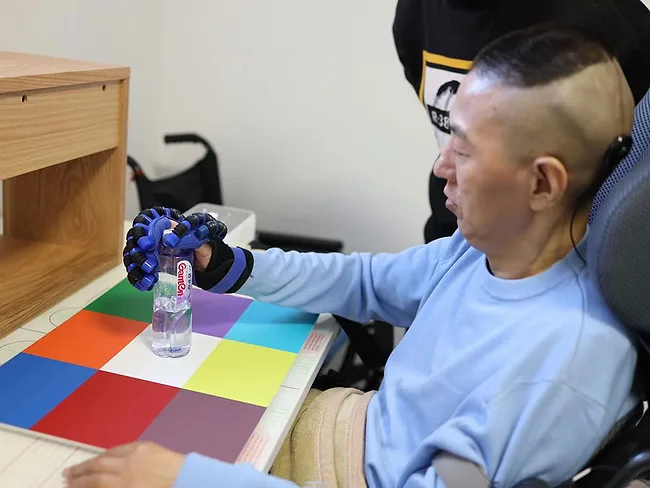
Neuracle Medical Technology Co. Ltd. is seeking a Shanghai IPO that could make it China’s first publicly listed invasive brain-computer interface (BCI) company, months after winning approval for the country’s first invasive BCI system.
Ready or not, the future has arrived. Novel AI and brain-computer interface (BCI) systems are no longer confined to the realm of science fiction. As an increasingly intertwined human-machine model moves closer to adoption in real-world clinical and military practice, technological advances are sparking concerns over public health, ethics and national security.
Amyotrophic lateral sclerosis (ALS)-associated genes provide direct therapeutic targets and reveal pathways that can be used to develop treatments that counteract their harmful molecular effects. Because the underlying causes of most ALS cases remain unknown, identifying disease-associated variants is essential to uncover the mechanisms that drive the disease, as shown at the European Network to Cure ALS (ENCALS) meeting, held in Madrid from June 24 to 26, 2026.
Neither of Cynata Therapeutics Ltd.’s pivotal trials for its Cymerus stem cell platform met the primary endpoints, with no statistically significant differences between active and control groups on primary or key secondary efficacy measures, CEO Kilian Kelly told investors during a June 22 conference call.
Decades of research are helping unravel the “black box” of the brain. The second article in BioWorld’s series on the Brain-Computer Interface (BCI) field looks at how simultaneous breakthroughs in AI technology are pushing the BCI field from a theoretical concept to a potential real-world, clinical option for individuals, particularly in China where the National Medical Products Administration greenlighted the world’s first invasive BCI system – Neuracle Medical Technology Co. Ltd.’s Neural Electronic Opportunity – for clinical use in March 2026.
Neither of Cynata Therapeutics Ltd.’s pivotal trials for its Cymerus stem cell platform met the primary endpoints, with no statistically significant differences between active and control groups on primary or key secondary efficacy measures, CEO Kilian Kelly told investors during a June 22 conference call.
Arthrogryposis multiplex congenita (AMC) is a group of disorders defined by two or more contractures in different body areas; while genes encoding sarcomeric proteins are usually involved in its pathogenesis, the role of the dystrophin complex is not well studied in AMC. Utrophin, encoded by the UTRN gene, is an important fetal dystrophin homologue and was the focus of a recently presented study.
Applied Biologics LLC has initiated a preclinical research program focused on osteoarthritis and other degenerative diseases. The program marks an expansion of the company’s research and development efforts beyond chronic wounds.
Edgewise Therapeutics Inc. is pulling in $1.55 billion up front by selling its muscular dystrophy business, including its fast skeletal myosin inhibitor, sevasemten (EDG-5506), to Servier SA. The deal is potentially worth up to $2.65 billion when including a potential $1.1 billion in milestone payments.
 RSS
RSS