Lack of efficacy brought the development of two investigational agents for amyotrophic lateral sclerosis (ASL) to a halt over the past week. On May 23, Wave Life Sciences Inc. disclosed that its stereopure antisense oligonucleotide WVE-004 failed to demonstrate clinical benefit after 24 weeks of treatment on a phase Ib/IIa trial in familial ALS patients or frontotemporal dementia patients. And on May 25, Apellis Pharmaceuticals Inc. and its partner, Swedish Orphan Biovitrum International AB, said that pegcetacoplan failed to meet its primary endpoint of a one-year phase II trial in patients with sporadic disease.
Exo Therapeutics Inc. has announced its lead program directed against TANK-binding kinase 1 (TBK1) for the treatment of autoimmune diseases. The company is now approaching identification of a development candidate for its lead program, an exosite-targeted compound that selectively reprograms the activity of TBK1 in the STING pathway that drives pathogenic signaling in diseases such as systemic lupus erythematosus, Aicardi-Goutières syndrome and others.
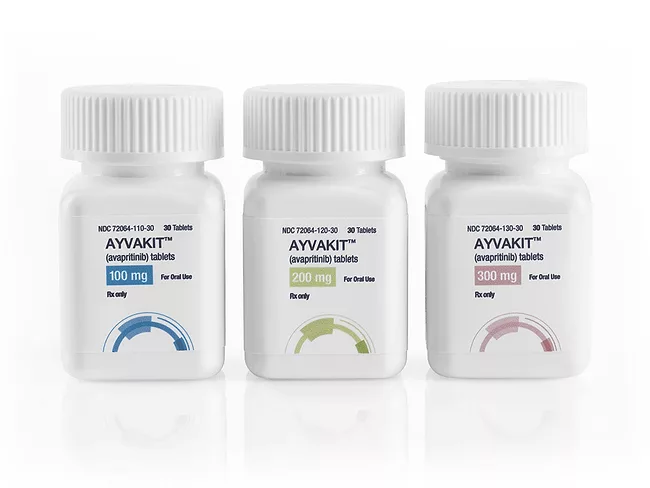
Blueprint Medicines Corp. scored a broader label from the U.S. FDA for Ayvakit (avapritinib), which became the first approved therapy to treat adults with indolent systemic mastocytosis (ISM).
Sarepta Therapeutics Inc.’s balloting March 12 from the U.S. FDA’s Cellular, Tissue and Gene Therapies Advisory Committee (OTAT) in favor of gene transfer therapy SRP-9001 (delandistrogene moxeparvovec) in Duchenne muscular dystrophy (DMD) had Wall Street mulling the odds for others in the space.
Sensitized nociceptors, such as during inflammation, respond to non-noxious stimuli. The precise molecular mechanisms for sensitization to mechanical stimuli are not well defined. Recent findings have suggested piezo-type mechanosensitive ion channel component 2 (Piezo2) to be part of these mechanisms.
The debate over Sarepta Therapeutics Inc.’s gene transfer therapy, SRP-9001 (delandistrogene moxeparvovec), in Duchenne muscular dystrophy (DMD) proved as thorny as expected during a closely watched meeting of the U.S. FDA’s Cellular, Tissue and Gene Therapies Advisory Committee. Panelists voted on a single question: “Do the overall considerations of benefit and risk, taking into account the existing uncertainties, support accelerated approval of SRP-9001, using as a surrogate endpoint expression of Sarepta’s microdystrophin at week 12 after administration, for the treatment of ambulatory patients with DMD with a confirmed mutation in the DMD gene?” Balloting turned out 8 yes, 6 no.
Blocking signaling through the ectodysplasin A2 receptor (EDA2R), a member of the TNF receptor family, protected tumor-bearing mice from developing muscle atrophy associated with cancer cachexia. Upstream and downstream of EDA2R, “we identified two distinct pathways and we demonstrated their involvement in muscle wasting,” Serkan Kir told BioWorld. Kir is a professor at the Koç University Center for Translational Medicine and corresponding author of the paper reporting the findings, which appeared in Nature on May 10, 2023.
A new mouse model of an inherited form of dystonia has shown the spinal cord is the driver of the condition, overturning previous understanding that the movement disorder is caused by disruption of neural circuits in the brain. The connection was demonstrated by selectively deleting torsin family 1 member A (TOR1A), the gene that causes dystonia, in the neurons of the spinal cord only.
How grave they might be remains unknown, but regulatory questions have surfaced in briefing documents related to the soon-to-happen panel meeting on Sarepta Therapeutics Inc.’s gene transfer therapy delandistrogene moxeparvovec in Duchenne muscular dystrophy (DMD). The U.S. FDA’s Cellular, Tissue and Gene Therapies Advisory Committee will meet May 12 to discuss the compound, also known as SRP-9001.

 RSS
RSS