Complete response letter hurdles overcome and U.S. FDA clearance in hand, Axsome Therapeutics Inc. will disclose pricing in about four months, closer to the launch of Symbravo to treat adult migraine with or without aura.
EMA approval of the Alzheimer’s disease therapy Leqembi (lecanemab) has stalled once again, after the European Commission did not as usual nod through the agency’s recommendation, but told it to examine safety data that have recently become available.
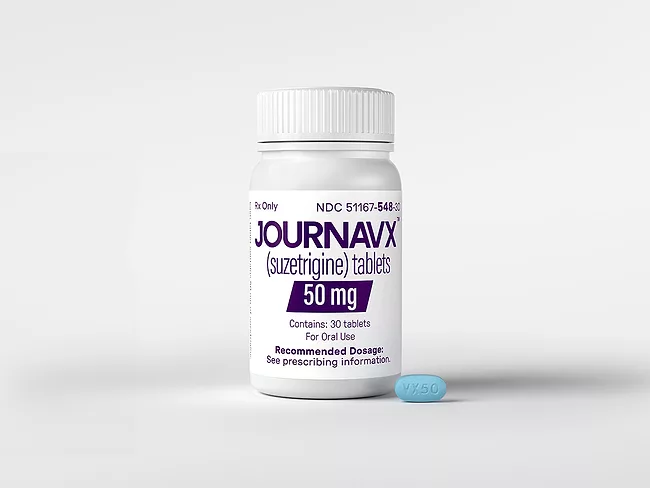
An effort two decades in the making, Vertex Pharmaceuticals Inc.’s suzetrigine gained U.S. FDA approval as the first drug targeting the NaV1.8 pain signal. Branded Journavx, the oral small molecule is cleared for use as a non-opioid option for treating moderate to severe acute pain.
Alterity Therapeutics Ltd. reported positive top-line phase II results for lead candidate ATH-434 for treating multiple system atrophy, a rare neurological disorder similar to Parkinson's disease.
Harness Therapeutics Ltd. has raised fresh financing to further develop its technology for upregulating the translation of mRNA into proteins, and in particular to take on a previously undruggable target in Huntington’s disease.
Lantheus Holdings Inc. is making waves in M&A with its second big deal of the month – and year – the acquisition of Evergreen Theragnostics Inc. for $250 million in cash up front and up to an additional $752.5 million in contingent payments. The transaction follows announcement of a definitive agreement to acquire Life Molecular Imaging Ltd., a subsidiary of Life Healthcare Group Holdings Ltd., on Jan. 13 for $350 million in cash at closing and a further $400 million in milestone payments.
In another cautionary tale of kicking all the tires before an acquisition, Pfizer Inc. agreed to a nearly $60 million settlement to resolve a whistleblower’s claims that Biohaven Pharmaceutical Holding Co. Ltd. was paying kickbacks to induce prescriptions of its migraine drug ahead of Pfizer’s $11.6 billion acquisition of the company in October 2022.
A U.S. Federal Claims Court judge shot down Vanda Pharmaceuticals Inc.’s accusations that the FDA disclosed the company’s trade secrets to generic competitors, finding that the trade secrets weren’t really secret or necessarily proprietary to Vanda.
To realize the promise of cell therapy for neurodegenerative disorders, S.Biomedics Co. Ltd. is looking to expand clinical trials of TED-A9, its stem cell therapy for Parkinson’s disease (PD), to the U.S., having reaped positive results from a domestic phase I/IIa trial in November 2024.
Icelandic genomics company Arctic Therapeutics has closed a €26.5 million (US$27.6 million) series A, enabling it to assess if its lead drug AT-001, designed to treat a rare inherited amyloid disease, also could be used to treat more common forms of dementia, including Alzheimer’s disease. The program is currently in a phase IIb/III European trial in cystatin C amyloid angiopathy, an ultra-rare disease found only in Iceland that is caused by the L68Q mutation in the cystatin C gene.

 RSS
RSS