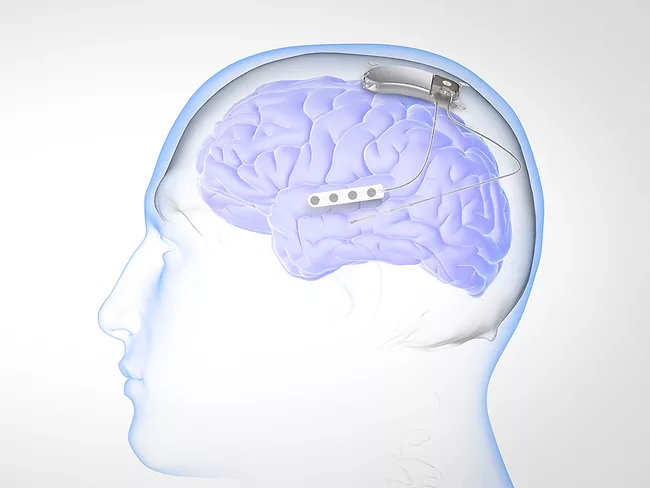
Nia Therapeutics Inc. reported data from an in vivo study of its Smart Neurostimulation System, an AI-based brain-computer interface (BCI), which demonstrated its ability to perform chronic sensing, neural-state decoding and programmable stimulation.
A review of 2025's noteworthy advances in medical research, including GLP-1 receptor agonists as anti-aging drugs, tumor-agnostic therapies and xenotransplants.
Gene editing technologies are moving forward in preclinical development with innovative strategies designed to treat diseases at their root and even reverse them.
Researchers at the University of Sydney have uncovered a mechanism that may explain why glioblastoma returns after treatment, and the world-first discovery offers new clues for future therapies. Glioblastoma is one of the deadliest brain cancers, accounting for about half of all brain tumors, with a median survival rate of just 15 months. Despite surgery and chemotherapy, more than 1,250 clinical trials over the past 20 years have struggled to improve survival rates.
Acryl Inc. debuted on South Korea’s Kosdaq Dec. 16, raising ₩42.12 billion ($28.5 million) in an IPO. Shares (KOSDAQ:0007C0) closed at ₩67,000 on the first day, up 243.5% from its offering price, before closing 30% down on Dec. 17 at ₩47,500. Seoul, South Korea-based Acryl sold 2.16 million shares priced at ₩19,500 each. Notably, Acryl won South Korea Ministry of Food and Drug Safety approval of Acryl-D01 software in December 2024, making it the country’s first AI-based digital therapeutic solution for depression screening and diagnosis. The generative AI-based medical software is cleared to analyze patient interviews and medical records and provide a probability score for clinical depression.
Sometimes the darkest products (names) bring a bright spot of news to their developers, as the U.S. FDA clearance for Galway, Ireland-based Medtronic plc's Onyx liquid embolic system demonstrates. Onyx gained the indication for embolization of the middle meningeal artery as an adjunct to surgery for the treatment of symptomatic subacute or chronic subdural hematoma based on the EMBOLISE trial results. The approval represents a significant advancement in treating this common neurosurgical condition.
Flow Neuroscience AB received U.S. FDA 510(k) approval for its Flow at-home brain-stimulation device to treat major depressive disorder. The wearable headset uses mild electrical current to stimulate specific areas of the brain to reduce depressive symptoms in as little as three weeks.
Epiminder Ltd. raised AU$125 million (US$82.99 million) in its initial public offering on the Australian Securities Exchange to commercialize its Minder system, a long-term ambulatory electroencephalography monitoring device for epilepsy.
People with drug-resistant epilepsy have had few other options, but Neuropace Inc. appears on target to provide an alternative. The Nautilus trial of its responsive neurostimulation system for individuals with drug-resistant idiopathic generalized epilepsy showed a 77% reduction in generalized tonic-clonic seizures sustained over 18 months.
The U.S. FDA granted accelerated approval for the Biologics License Application for Axogen Inc.'s Avance, an acellular nerve allograft that serves as a scaffold for nerve regrowth, for treatment of patients with sensory, mixed and motor peripheral nerve discontinuities. The company expects Avance to be commercially available in the second quarter of 2026.
 RSS
RSS