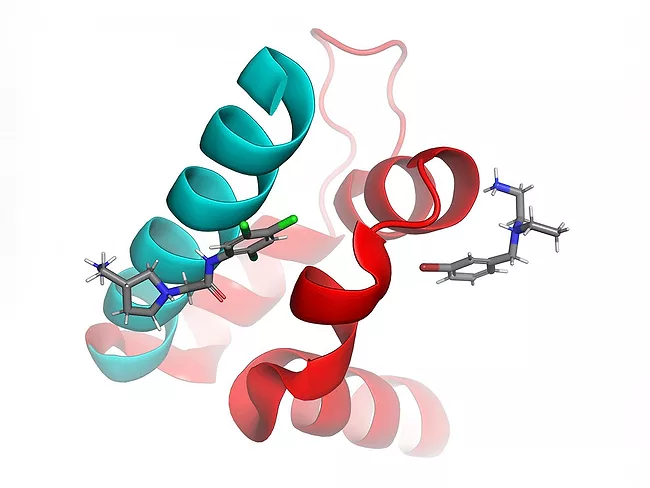
Investigators at the University of Heidelberg have identified a previously unknown mechanism for excitotoxicity and used their insight to identify “unconventional neuroprotectant” compounds that could prevent cell death and reduce brain damage in a mouse model of stroke.
HONG KONG – Israel’s Ben-Gurion University of the Negev (BGU) has set up a company to further develop and commercialize its technology into a wearable device for predicting epilepsy-related seizures.
Researchers at the Feinstein Institutes for Medical Research, the research arm of New York-based Northwell Health, have developed a noninvasive method for targeting stimulation of the vagus nerve. Vagus nerve stimulation (VNS) offers promise for treatment of a wide range of conditions, given the nerve's extensive involvement in regulating many organs, but has been constrained by adverse effects caused by off-target activation of fibers.
Keeping you up to date on recent developments in neurology, including: Social isolation increases anxiety and asymmetry in brain atrophy in AD; Researchers test brain stimulation in zero gravity; Angiotensin inhibitors for AD prevention.
Keeping you up to date on recent developments in neurology, including: Putting virtual rehab for stroke patients to the test; Deep learning tool advances study of neural degeneration; Popular opinion correct on fear, anxiety.
Children with autism spectrum disorder (ASD) can face a lifetime of frustration because of challenges with communication, social behaviors and flexibility of thought. Early intervention can improve outcomes, but nailing a diagnosis of ASD often takes years. Cognoa Inc. wants to change that with its digital ASD Diagnostic and is on track to apply for U.S. FDA clearance before the end of the year.
LONDON – Sleep disorder specialist Nyxoah SA hit the top end of its price range of €17 per share, raising €84.75 million (US$100) million in its initial public offering. Assuming full exercise of the over-allotment option, the company will have a market capitalization of €375.26 million. The shares began trading on Euronext Brussels (EBR:NYXH) on Sept. 18, and had a good first day, closing up 14.7%, at €19.50.
Keeping you up to date on recent developments in neurology, including: New smart drug delivery system may help treatment for neurological disorders; Imaging probe developed for Alzheimer's disease; Potential target identified for migraine therapy.
In August, Cala Health Inc. reported results from its pivotal PROSPECT study showing significant improvement in hand tremors with use of its Cala Trio wearable neuromodulation therapy. Now the company has real-world evidence affirming the benefit to patients with essential tremor (ET) who used Cala Trio at home over several months.
TORONTO – Most doctors recognize the symptoms instantly: hand tremors, slurred speech, impaired posture and balance. What they don’t always associate with people suffering from Parkinson’s disease are hallucinations and delusions.
 RSS
RSS