HONG KONG – Aprinoia Therapeutics Inc. is poised to start phase III clinical trials for its positron emission tomography (PET) imaging tracer 18F-APN-1607 in China, after receiving the green light from the National Medical Products Administration.
Keeping you up to date on recent developments in neurology, including: Software developed to objectively calculate white matter hyperintensities; CSF biomarkers point to underlying cause of neural damage in COVID-19; Scientists discover how cryptochrome mutation leads to sleep disorder; Physical labor significantly increases the risk of dementia.
Neuroem Therapeutics Inc. has received breakthrough device designation from the U.S. FDA for Memorem, a bioengineered, wearable head device for the treatment of Alzheimer’s disease. The breakthrough nod, which entitles companies to an expedited regulatory process, follows results from a pilot study showing Memorem can reverse memory loss in patients with the debilitating brain disorder.
PERTH, Australia – Neuroscience technology company Cogstate Ltd. and Japanese pharmaceutical company Eisai Co. Ltd. signed a deal under which Eisai will have global development rights and exclusive commercialization rights of all cognitive function tests developed by Cogstate, including the Cogstate Brief Battery (CBB) for use in health care and other markets.
PARIS – Carthera SAS, of Paris, has obtained a $2.4 million grant and $12.5 million equity investment from the European Innovation Council (EIC) for the development of its ultrasound-based medical device for treating glioblastoma.
A new tool for mobile devices can diagnose stroke as accurately as an emergency medicine specialist in just minutes, enabling patients to get brain-saving therapies in time for maximum benefit. According to researchers from Pennsylvania State University and Houston Methodist Hospital, the artificial intelligence (AI)-based tool could counterbalance physician biases, reducing both overuse of CT scans and underdiagnosis of mild and moderate stroke.
Keeping you up to date on recent developments in neurology, including: MIT develops wearable sensor for ALS patients; Cord blood DNA can hold clues for early ASD diagnosis and intervention; ENIGMA consortium offers hope for improving treatment of brain injuries.
Digital medicine startup Appliedvr Inc. has gained breakthrough device designation status from the U.S. FDA for its virtual reality (VR) platform for treating treatment-resistant fibromyalgia and chronic intractable lower back pain. The designation follows the completion of a clinical trial assessing VR-based therapy for self-management of chronic pain at home.
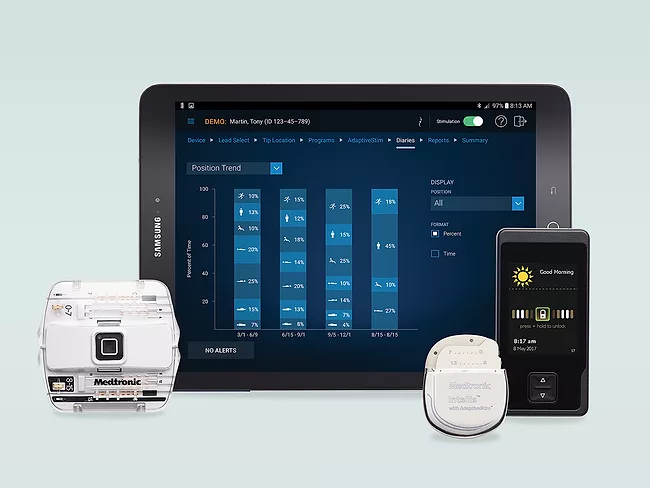
Medtronic plc reported 12-month data from a large, multicenter, randomized controlled clinical trial affirming the superiority of differential target multiplexed spinal cord stimulation (DTM SCS) in relieving chronic back pain, vs. traditional SCS therapy, using its Intellis platform.
Keeping you up to date on recent developments in neurology, including: Study highlights links between inflammation and Parkinson’s disease; Some sedentariness in older adults OK when it comes to brain, cognition; Microbiome metabolite affects neuropathic pain; Following neonatal lead enables spinal cord repair in mice.
 RSS
RSS