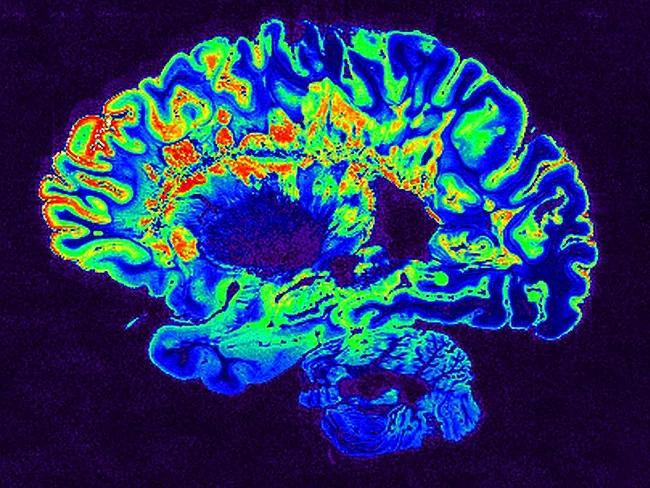
A group of international partners with expertise in therapeutics, technology, health data management and data science have joined forces to develop a range of digital tools that will predict and monitor dementia. The two-year pilot project launched in the U.K. will see the unique group focus their initial efforts on developing data and digital solutions to complement existing treatments as well as solving issues related to the prediction, prevention, management and treatment of dementia related disorders.
Four-repeat (4R)-tauopathies are neurodegenerative diseases whose main hallmarks are brain accumulations of specific protein tau isoforms that lead to syndromes such as progressive supranuclear palsy (PSP) or corticobasal syndrome. There are yet no sensitive-enough PET tracers for 4R-tauopathies.
Artificial intelligence (AI) continues to entice. On the exhibition floor at the 2023 Congress of the European Academy of Neurology, one company’s booth featured “Mindart” technology. A passersby could answer a short series of prompts, and get a unique image based on the input made by generative AI. Entertainment aside, medically speaking, AI applications “are still research,” Riccardo Soffietti told his audience at one of several sessions devoted to AI. “But obviously, research is the future.”
Etnova Therapeutics Co. Ltd. has described gadolinium complexes reported to be useful for the treatment of stroke, ataxia, epilepsy, spinal cord injury, optic nerve injury, Alzheimer’s disease, Parkinson’s disease and Huntington’s disease, among others.
Glioblastoma is a particularly aggressive form of brain cancer characterized by rapid infiltration into surrounding brain tissue, especially in areas of increased neuronal activity. Neurons and nerve fibers have recently been identified as vital components of the tumor microenvironment that favor the initiation and progression of a variety of solid tumors, including gliomas. Researchers have gained new insights into the molecular mechanisms driving glioblastoma infiltration and identified subtypes of neurons that serve as the substrate for driving tumor progression.
Although the highest dose of Bioxcel Therapeutics Inc.’s BXCL-501 hit the primary endpoint in the phase III Tranquility II trial for acute agitation in Alzheimer’s disease patients, shares fell dramatically on June 29 by 64% when investors learned the company received an FDA warning letter over infractions at a trial site.
Duchenne muscular dystrophy (DMD) is an X-linked genetic disorder affecting roughly 1 in 3,500 males. DMD is due to mutations in the dystrophin gene, which encodes for an exceptionally large 427 kD protein. DMD is characterized by repeated degeneration and regeneration of muscle fibers, but ultimately replacement of muscle with fibrotic and adipose tissue. Despite advances in gene therapy and improvements in quality of life, most patients still die by 30 years of age due to cardiopulmonary failure.
Multiple sclerosis (MS) is and remains “a problem in the immune system” Stephen Sawcer told BioWorld. As in other autoimmune diseases, a faulty immune system attacks otherwise healthy tissues that it should be leaving alone. In the case of MS, the tissue in question is oligodendrocytes. And a study published online in Nature on June 28, 2023, suggests that while MS’ beginnings are autoimmune, the path it takes in an individual patient is determined in part by how well the brain can cope with the autoimmune attack.
With the latest data from the phase II Sequel study, Cognition Therapeutics Inc. added new physiological evidence for the neuroprotective effect of CT-1812 in mild to moderate Alzheimer’s disease (AD) bolstering earlier results related to target engagement and the compound’s impact on cognitive changes. But the results failed to hit statistical significance, and shares of New York-based Cognition (NASDAQ:CGTX) closed June 28 at $2.18, down 32 cents, almost 13%.

 RSS
RSS