South African Rugby and the U.S. National Football League (NFL) are actively studying ways to more quickly and reliably diagnose concussions and find more effective treatment for their sequelae. Researchers at the University of Birmingham and Marker Diagnostics Ltd. have identified a biomarker that signals a concussion has occurred, while a team at Electrocore Inc. is working with the NFL to address post-concussion headaches.
The U.S. Department of Health and Human Services has synthesized cannabinoid CB1 receptor antagonists reported to be useful for the treatment of cancer, metabolic, psychiatric, neurological, pain, gastrointestinal, inflammation, and substance abuse and dependence.
Spinogenix Inc. is opening enrollment in a first-in-human phase I trial of SPG-302 for the treatment of amyotrophic lateral sclerosis (ALS), having received approval from Australia's Human Research Ethics Committee (HREC).
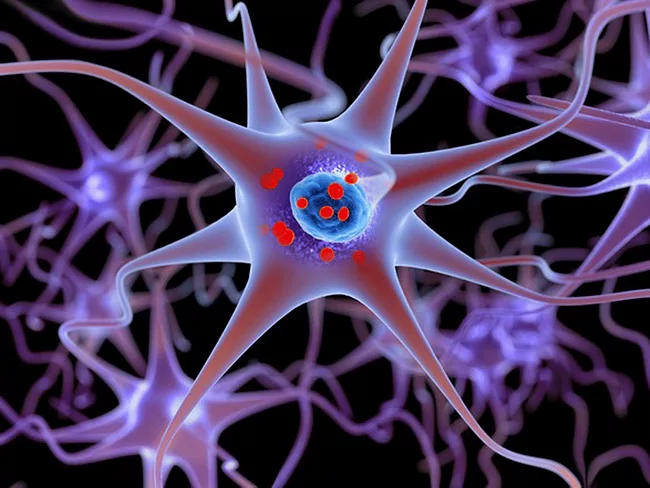
The loss of the dopaminergic neurons in the substantia nigra and their projections in the putamen cause motor disabilities, which are one of the main hallmarks in patients with Parkinson’s disease (PD).
Electromedical Products International Inc. (EPI) Alpha-Stim AID technology is finally being made available by the NHS in the U.K. to treat patients with anxiety some two years after the National Institute for Health and Care Excellence (NICE) said there was not enough good-quality evidence to support the case for routine adoption.
Cannabidiol derivatives potentially useful for the treatment of Parkinson’s disease and epilepsy have been described in a Deyi Pharmaceutical Co. Ltd. patent.
Schizophrenia (SCZ) could be associated with genetic alterations that can appear at the beginning of life. Such somatic variants in the NRXN1 and ABCB11 genes could lead to SCZ, according to researchers at Boston Children’s Hospital.
The British Museum in London, steeped in history and tradition, sits alongside world class biomedical and clinical research centers, where numerous technological advances and scientific breakthroughs have originated. “This unique combination of tradition and innovation […] also defines our industry today,” said Rivki Stern, co-founder and CEO of Shortwave Pharma Inc., which is working to develop psychedelic drugs as approved medicines that meet unmet medical needs of patients with treatment-resistant depression, addictions and eating disorders.
Researchers from Stanford University and affiliated organizations have provided details on the discovery and preclinical evaluation of [11C]MGX-10S, a novel PET tracer for GPR84, which is a G protein-coupled receptor (GPCR) expressed predominately on myeloid cells.
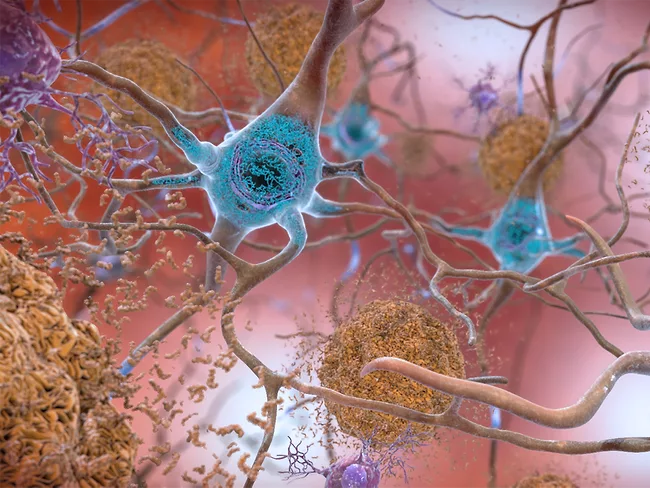
With the approval of Aduhelm (aducanumab, Eli Lilly & Co.) and Leqembi (lecanemab, Eisai Co. Ltd.), there are finally amyloid-targeting drugs available for Alzheimer’s disease (AD). What’s not available, though, are rose-colored glasses of the prescription strength that would make these approvals look like AD’s happy ending. The biopharma industry is already well aware of the need for broader horizons. Roughly three-quarters of drugs now in clinical development for AD target neither amyloid-β (Aβ) nor tau. Still, the genetic evidence from familial AD strongly implicates Aβ processing in AD’s origins. In his opening plenary talk at the European Academy of Neurology 2023 annual conference, Thomas Südhof suggested new ways to look at the clinical data.

 RSS
RSS