Orexia Therapeutics Ltd. has divulged 2-(3-ethynylbenzyl)-substituted heterocycle derivatives acting as orexin OX2 receptor agonists reported to be useful for the treatment of narcolepsy, hypersomnia, insomnia and sleep apnea.
Cellevolve Bio Inc. announced that the FDA has cleared its IND application for CE-VST01-JC, an allogeneic, off-the-shelf, JC-specific T-cell therapy (JC-VST) targeting JC polyoma virus (JCV), being studied for the treatment of progressive multifocal leukoencephalopathy (PML).
There is little doubt that progress in many brain diseases is being hampered because many, maybe most, diagnostic categories do not reflect underlying brain processes. In other disease areas, modern genetic and genomic methods have arrived in the form of approved drugs, from KRAS inhibitors in cancer to PCSK9 inhibitors to lower cholesterol. But brain diseases are different. Psychiatry is simultaneously the most personal area of medicine, and the least precise.
Astellas Pharma Inc. has invested $50 million in Taysha Gene Therapies Inc. in exchange for 15% of the company and exclusive options to in-license Taysha’s lead gene therapy candidates, TSHA-102 for Rett syndrome and TSHA-120 for giant axonal neuropathy.
Compounds acting as AMP-activated protein kinase (AMPK) activators and prostaglandin G/H synthase 2 (PTGS2; COX2) inhibitors have been reported by Nanjing Shupeng Lifescience to be useful for the treatment of pain and inflammatory disorders, among others.
Reduced expression of nuclear factor erythroid 2-related factor 2 (Nrf2) is observed in humans and animal models of Alzheimer’s disease (AD), with its activation being a promising therapeutic approach.
Gb Sciences Inc. has received promising preclinical results in an interim report from a study using its plant-based compounds in preclinical zebrafish models of stress at the National Research Council of Canada (NRC).
Enveric Biosciences Inc. has nominated EB-373 as the lead development candidate to emerge from its EVM201 program. EB-373 is under development for the treatment of anxiety disorders.
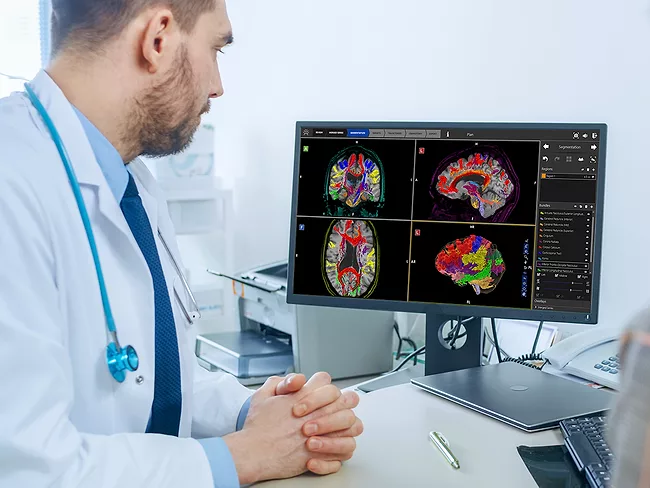
Synaptive Medical Inc. has introduced a free water correction feature to its Modus Plan software to restore tracts in areas surrounding brain lesions affected by edema and which interferes with automated mapping of the brain. Water from edema obscures retrieval of diffusion tensor imaging (DTI) data and tractography mapping used to evaluate white matter pathways in the brain.