By pairing the expression of an inhibitory ion channel with an activity-dependent promoter, researchers have developed the first on-demand gene therapy that specifically silenced hyperactive cells and prevented epileptic seizures.
Once pharma’s great hope to replace opioid painkillers, it looks like the end for nerve growth factor (NGF) inhibitors after Regeneron Pharmaceuticals Inc. quietly axed fasinumab, the late-stage painkilling injection it was developing in partnership with Teva Pharmaceuticals Ltd. and Mitsubishi Tanabe Pharma Corp.
Sunovion Pharmaceuticals Inc. has identified chroman and benzofuran derivatives acting as 5-HT1A and trace amine-associated receptor 1 (TAAR1) agonists reported to be useful for the treatment of depression.
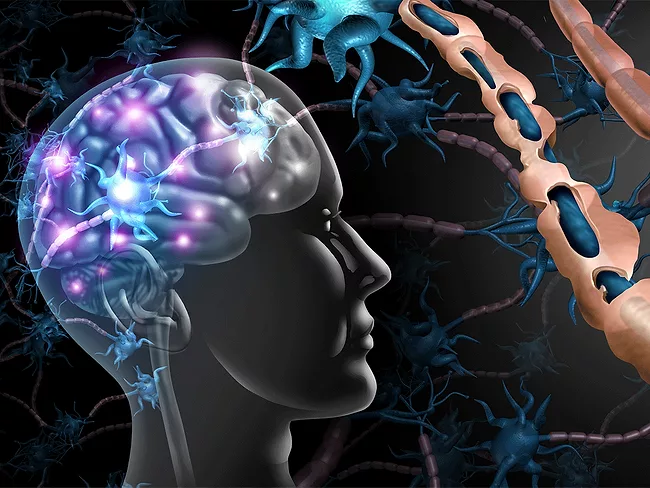
The failure to remyelinate neurons following an attack is one of the major characteristics of multiple sclerosis (MS) ultimately causing the progressive loss of neurological dysfunction.
Satellos Bioscience Inc. has created, prioritized and advanced novel small-molecule drug candidates into further preclinical studies. The company's compounds have been designed to be potent and selective inhibitors of a particular kinase protein in the Notch pathway.
By pairing the expression of an inhibitory ion channel with an activity-dependent promoter, researchers have developed the first on-demand gene therapy that specifically silenced hyperactive cells and prevented epileptic seizures. The channels are expressed when the promoter is turned on by excessive neuronal activity, and so “we can’t stop the first seizures,” Dimitri Kullmann told BioWorld.

 RSS
RSS