Minoryx Therapeutics SL is banking what it described as “a significant double-digit up-front payment” and could earn up to €258 million (US$262.1 million) more in milestone payments and development funding from a license agreement with Neuraxpharm GmbH, which covers European rights to its lead drug candidate, leriglitazone, in central nervous system indications. It will also receive tiered double-digit royalties on product sales.
Researchers from Washington University presented data from a study that aimed to identify myeloid-derived suppressor cell (MDSC) markers in patients with multiple sclerosis (MS).
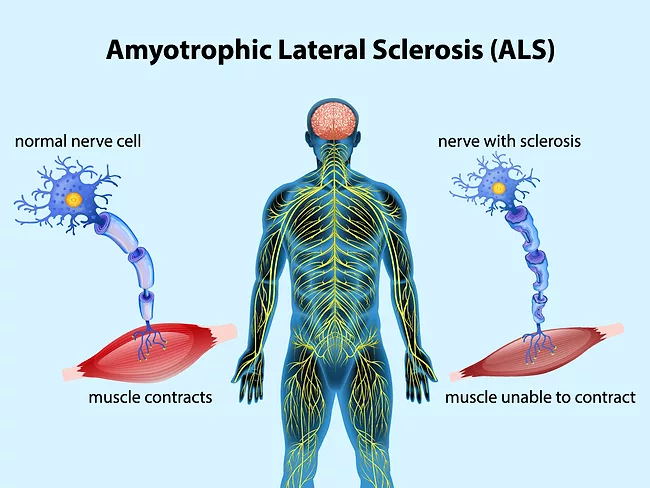
The FDA has awarded orphan drug designation to Eikonoklastes Therapeutics Inc.'s ET-101 program for the treatment of amyotrophic lateral sclerosis (ALS).
Small nuclear RNAs (snRNAs) play a crucial role in RNA splicing and cell functioning. The transcription of these RNAs is initiated by small nuclear RNA activation protein complex (SNAPc), and SNAPC4 is the subunit in charge of SNAPc-DNA binding. Previous studies have found that SNAPC4 deficiency led to decreased expression of these RNAs in animal models.
NRG Therapeutics Ltd. has closed a £16 million (US$18.3 million) series A round to take forward programs in Parkinson’s disease and amyotrophic lateral sclerosis, after pinning down the target of its brain penetrant small molecules.
The Alborada Drug Discovery Institute (ADDI) will collaborate with YD Global Life Science Co. Ltd. (YDGLS) to develop inhibitors of the unfolded protein response for the treatment of diseases that cause dementia.
Neuropn Therapeutics LLC has divulged piperidine urea derivatives as bifunctional epoxide hydrolase 2 (EPHX2; sEH) inhibitors reported to be useful for the treatment of Parkinson's disease, pain, inflammation and neurodegeneration.
G protein-coupled receptor 183 (GPR183/EBI2) is one of the key regulators of the innate immune system, and it has been shown to be upregulated in multiple sclerosis (MS) plaques. In a recently reported study, researchers from Medical University of Gdansk evaluated the effects of pharmacological modulation of GPR183 signaling on remyelination.
One way psychiatric disorders differ from neurological disorders is by the absence of anatomically defined neuropathology. “Alzheimer's disease, Parkinson's disease or stroke have a very clear picture of what cells are changing and how they're changing. The specific changes are very clear under a microscope, but in psychiatric diseases one hasn't been able to see that,” Daniel Geschwind told BioWorld.
Luye Pharma Group has received marketing approval from China’s NMPA for the triple monoamine reuptake inhibitor Ruoxinlin (toludesvenlafaxine hydrochloride) to treat patients with major depressive disorder, a condition that “has become one of the most prevalent mental disorders in China, causing a heavy burden on patients, their families and the entire society,” said Luye President Yang Rongbing.
 RSS
RSS