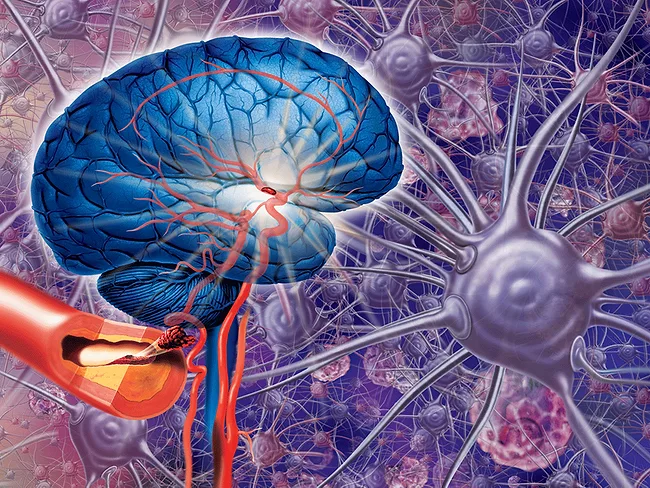
Researchers at the University of Cincinnati have published data showing that in patients with dominantly inherited Alzheimer’s disease (AD)-causing mutations, high levels of soluble amyloid-β42 (Aβ42) in the cerebrospinal fluid (CSF) predicted a reduced risk of developing dementia over 3 years. Their work, which appeared in the Oct. 4, 2022, print issue of the Journal of Alzheimer’s Disease after earlier publication online, suggests that the problem with amyloid in AD may be a lack of soluble amyloid-β, rather than a surfeit of plaques.
Shares in Evgen Pharma plc more more than doubled in value after the biotech signed a deal worth up to $160.5 million with Stalicla SA, to develop sulforaphane-based drug SFX-01 for certain patients with autism spectrum disorder.
Jiangsu Hansoh Pharmaceutical Group Co. Ltd. and Shanghai Hansoh Biomedical Co. Ltd. have synthesized orexin OX2 receptor antagonists reported to be useful for the treatment of major depression and insomnia.
Despite clinical responses undermining expectations for the placebo arm of its phase III Alzheimer's disease (AD) study, Lucidity, Taurx Pharmaceuticals Ltd. executives Oct. 6 said they still see the data as supporting their ability to pursue regulatory submissions for hydromethylthionine mesylate (HMTM), an oral tau aggregation inhibitor. For people with mild cognitive impairment especially, they said, "HMTM treatment resulted in sustained improvement in cognition over pretreatment baseline, and normalization of brain atrophy to a rate similar to healthy individuals."
Latigo Biotherapeutics Inc. and Lieber Institute Inc. have synthesized new methyl-substituted pyridine and pyridazine compounds acting as sodium channel protein type 10 subunit α (Nav1.8) channel blockers reported to be useful for the treatment of pain, arthritis, atherosclerosis, irritable bowel syndrome, cancer and psychiatric, respiratory and neurological disorders, among other disorders.
Leitat Technological Center has patented 2,3-dihydro-1h-pyrrolo[3,2-b]pyridine derivatives acting as sigma non-opioid intracellular receptor 1 (SIGMAR1) and sigma intracellular receptor 2 (TMEM97) ligands reported to be useful for the treatment of pain, hyperalgesia, depression, anxiety and attention deficit hyperactivity disorder (ADHD).
Mirecule Inc. has entered into a strategic collaboration and exclusive license agreement with Sanofi SA to develop and commercialize a best-in-class antibody-RNA conjugate (ARC) for the treatment of facioscapulohumeral muscular dystrophy (FSHD).

 RSS
RSS