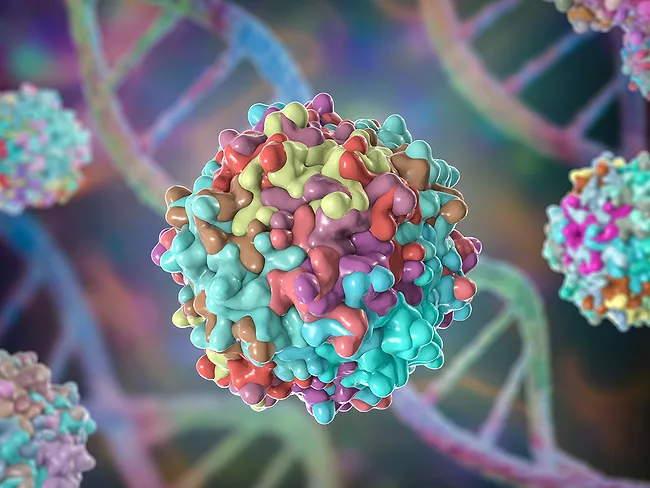
SBT-101 (Swanbio Therapeutics Inc.) is an adeno-associated virus serotype 9 (AAV9)-based gene therapy that delivers a functional copy of the ABCD1 gene and is under development for the treatment of adrenomyeloneuropathy (AMN).
As therapeutics development in Alzheimer’s disease (AD) is broadening its search for therapeutic targets, one of the alternatives to amyloid-β, or at least to its direct targeting by monoclonal antibodies, that is coming into focus is triggering receptor expressed on myeloid cells 2 (TREM2). From a drug development standpoint, amyloid-β remains a mystery. Scientific evidence clearly suggests that amyloid misprocessing is an underlying factor in the development of AD, and it is certainly a reasonable hypothesis that reducing amyloid plaque should fight the disease.
Neuropeptide FF receptor 1 (NPFFR1) and NPFFR2 regulate several biological functions and there is a lack of blockers for these receptors that allow the study of their function. Université de Strasbourg researchers have presented details on the design of RF-3286, an NPFFR1 antagonist for the potential treatment of hyperalgesia.
Bluebird Bio Inc.’s elivaldogene autotemcel (eli-cel) gained U.S. approval late Sept. 16 for use in early active cerebral adrenoleukodystrophy (CALD), making it the firm’s second gene therapy to clear the FDA in as many months. Branded Skysona, eli-cel is expected to be available commercially by the end of 2022 and its launch will require only “incremental” company resources on top of those required for the ongoing launch of beta-thalassemia gene therapy Zynteglo (betibeglogene autotemcel), Bluebird said.
Avicanna Inc. has expanded its research in the field of epilepsy through a new collaboration with the University of Toronto to explore the efficacy of Avicanna's proprietary formulations in preclinical models of epilepsy.
Sex differences at the cellular level could explain why men respond less well to glioblastoma (GBM) treatments, according to a study led by the Washington University School of Medicine in St. Louis (WUSTL). The researchers found that male and female GBM tumor cells had different metabolic needs. GBM cells from male surgical samples absorbed more glutamine and had different nutritional preferences for amino acids.
Research at Monash University has led to the identification of structurally novel muscarinic acetylcholine receptor (mAChR) positive allosteric modulators (PAMs) with potential utility in treating Alzheimer's disease and other cognition disorders.
Human endogenous retrovirus-K (HERV-K) belongs to the β-retrovirus-like supergroup of viruses, and it has been previously demonstrated that the expression of HERV-K subtype HML-2 envelope (Env) in human neuronal cultures or in transgenic mice resulted in neurotoxicity and neurodegeneration.
Using a two-drug combination, researchers at the University of California at San Francisco (UCSF) have been able to achieve brain-specific inhibition of several kinases.
 RSS
RSS