Nuclear receptor subfamily 1 group D member (NR1D1), also known as Rev-erbA-α, is highly expressed in the liver, adipose tissue, brain and skeletal muscle.
Serotonin 5-HT2 receptor agonists have shown efficacy in treating seizure disorders, such as epilepsy. At the American Epilepsy Society meeting this week, Longboard Pharmaceuticals Inc. presented data on their 5-HT2C receptor superagonist LP-352 for the treatment of epilepsy.
Oryzon Genomics SA has been awarded a $498,690 grant by the ALS Association to support the regulatory preclinical development of ORY-4001, a highly selective histone deacetylase 6 (HDAC6) inhibitor, for amyotrophic lateral sclerosis (ALS).
A multi-institutional research team has suggested that aberrant TDP-43 processing of the pre-mRNA of a microtubule-associated protein, stathmin-2 (STMN2), may be the primary contributor to amyotrophic lateral sclerosis (ALS).
Clinical data disappointments and third-quarte results cast a shadow on the BioWorld Neurological Diseases Index, closing November with an 18.37% year-to-date decline. This marks a slight improvement from its low point in October, down 23.79%, in contrast to the previous year’s upward trend, which it concluded with an 18.24% increase.
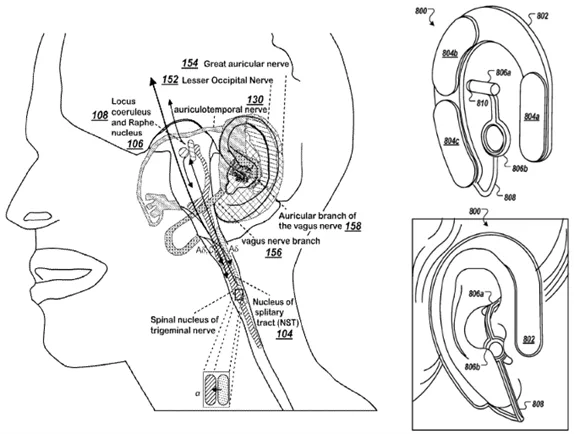
Spark Biomedical Inc. is seeking patent protection for the use of its transcutaneous auricular neurostimulation (tAN) platform for treating stress and improving performance in stressful situations while controlling bleeding.
Temporal lobe epilepsy (TLE) is the most common form of focal epilepsy characterized by recurrent seizures originating in the hippocampus and with sprouting of mossy fiber axons that contribute to new recurrent synaptic excitability in the dentate gyrus (DG).
PGI Drug Discovery LLC, the drug discovery arm of Psychogenics Inc., has entered into an exclusive license agreement with F. Hoffmann-La Roche Ltd. to obtain global development, manufacturing and commercialization rights to RO-7117997. Psychogenics intends to evaluate RO-7117997 as a potential treatment for several psychiatric and neurological conditions.
Intracellular chloride levels are crucial for physiological brain development and correct functioning. On the other hand, aberrant expression of chloride importer NKCC1 (basolateral Na-K-Cl symporter, SLC12A2) and exporter KCC2 (K-Cl cotransporter 2, SLC12A5) is involved in neurodevelopmental and neurologic conditions, including mesial temporal lobe epilepsy (MTLE), among others, leading to an imbalance between excitatory and inhibitory signals.
 RSS
RSS