4M Therapeutics Inc. has released promising results from completed GLP safety studies for its lead asset, 4MT-2001, supporting its potential to offer a safer treatment option to patients who are underserved by lithium and atypical antipsychotics.
Mosanna Therapeutics secured $80 million in a series A round to develop MOS-118 as a treatment for the nearly 1 billion people globally with obstructive sleep apnea (OSA). The company has completed the formulation work to make the drug into a nasal spray and the initial proof-of-concept animal studies and is now ready to enter clinical trials in patients with OSA.
Work at Sensorium Therapeutics Inc. has led to the identification of new serotonin transporter (SERT) inhibitors reported to be useful for the treatment of depression, anxiety and stress disorders.
Rgenta Therapeutics Inc. has synthesized new 2,3-dihydropyrollopyridine carboxamide compounds acting as PMS1 protein homolog 1 splicing modulators. They are reported to be useful for the treatment of amyotrophic lateral sclerosis, Friedreich ataxia, myotonic dystrophy, fragile X syndrome, frontotemporal dementia, Fuchs dystrophy, Huntington’s disease and spinal and bulbar muscular atrophy, among others.
N4-Acetylation of cytidine (ac4C) is an mRNA modification that enhances cellular mRNA stability and translation. Most eukaryotic organisms catalyze ac4C using a homologue of human N-acetyltransferase 10 (NAT10). Recent work has suggested the involvement of alterations in NAT10-mediated ac4C in several diseases, including autoimmune disorders, infections, inflammation and cancer.
London-based Livanova plc. has petitioned the U.S. CMS to cover vagus nerve stimulation device for treatment-resistant depression without the need for a clinical trial — a change that would eliminate the costly and cumbersome coverage with evidence development mechanism.
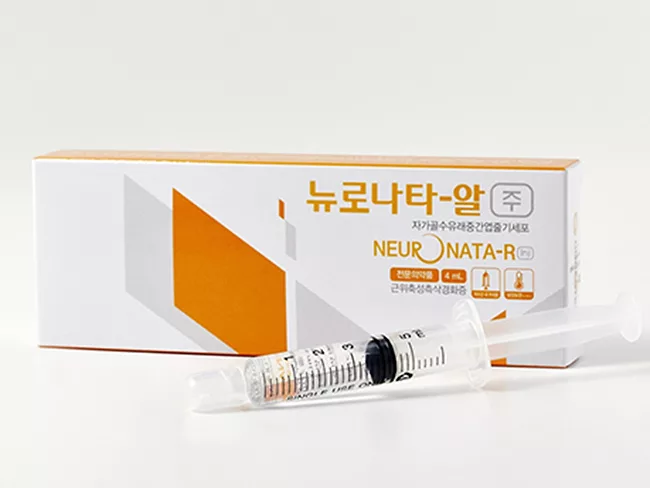
Corestemchemon Inc. is planning to file a BLA for Neuronata-R (lenzumestrocel) by the end of 2025 to gain accelerated approval from the U.S. FDA, company officials confirmed to BioWorld during a June 2 interview. Neuronata-R is an autologous bone marrow-derived mesenchymal stem cell therapy that first gained approval in South Korea in 2014 to delay the progression of amyotrophic lateral sclerosis (ALS), a progressive neurodegenerative disorder also known as Lou Gehrig’s disease.
As it advances its nonopioid analgesic ATX-101 breakthrough therapy through a phase IIb registration trial, Allay Therapeutics secured $57.5 million in a series D round, which included an investment from the company’s Japanese partner.
Aribio Co. Ltd. signed a $600 million license deal with Acino International AG, an Arcera Life Sciences subsidiary, granting the latter commercial rights to its oral Alzheimer’s disease therapy, AR-1001, in select countries including the Middle East.
Solve FSHD and Modalis Therapeutics Corp. have established a strategic collaboration to develop an innovative therapy for facioscapulohumeral muscular dystrophy (FSHD).
 RSS
RSS