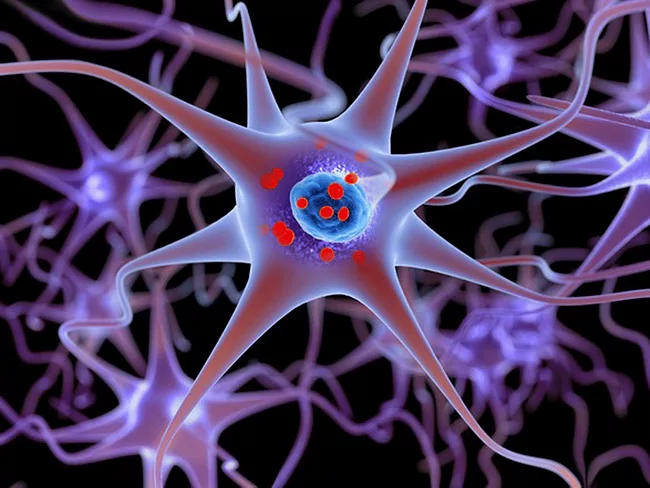
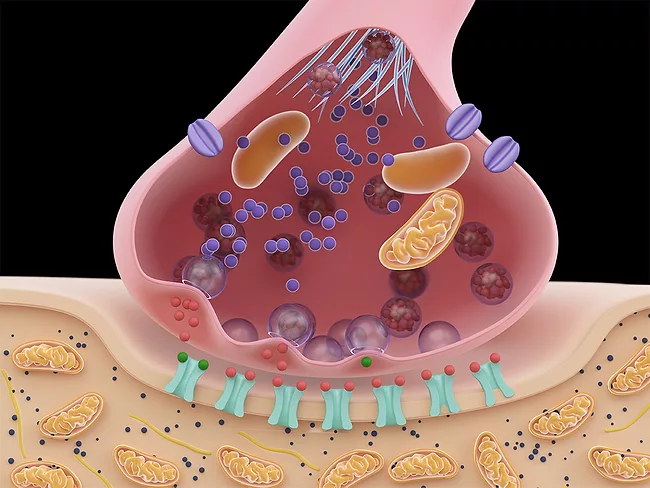
Parkinson’s disease (PD) is a neurodegenerative disorder characterized by the progressive loss of dopaminergic (DA) neurons in the substantia nigra, leading to clinical symptoms such as tremors, rigidity, bradykinesia and postural instability.
Enveric Biosciences Inc. has released promising preclinical results for its lead neuroplastogen drug candidate, EB-003, in the open space forced swim test, a preclinical mouse model of severe depression and despair. In the first study, an oral dose of EB-003 at 30 mg/kg significantly reduced depression-like behavior within 30 minutes of administration.
Four months after Vertex Pharmaceuticals Inc.’s U.S. FDA nod for Journavx (suzetrigine) as the first drug targeting NaV1.8 for treating pain, Eli Lilly and Co. is joining the potential competition via a buyout of Siteone Therapeutics Inc., a privately held firm developing small-molecule sodium channel inhibitors, including a phase II-ready NaV1.8 inhibitor.
University of Health Sciences and Pharmacy in St. Louis has described estrogen-related receptor α (ERR) modulators reported to be useful for the treatment of diabetes, amyotrophic lateral sclerosis, heart failure, breast cancer, renal disorders, metabolic diseases, Alzheimer’s disease and Parkinson’s disease, among others.
A new version of a drug candidate that failed in a phase II for neuropathic pain 15 years ago has attracted $140 million in series D funds, plus an ex-North American deal worth up to $570 million, for Grin Therapeutics Inc.
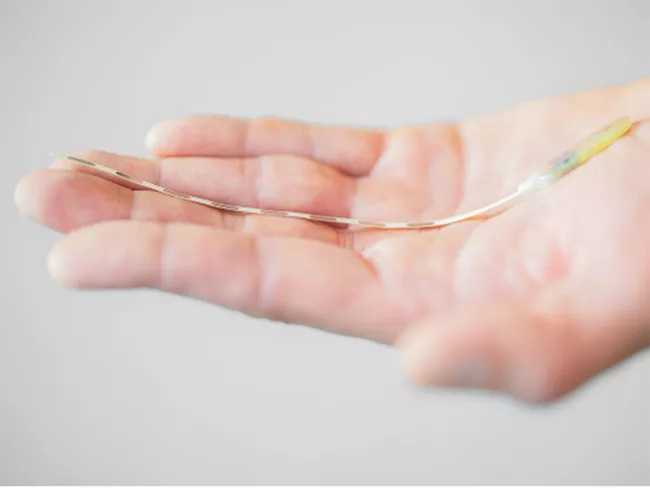
Salvia Bioelectronics BV raised $60 million in a series B financing round for its minimally invasive implantable neuromodulation device, Mysalvia therapy, which treats chronic migraine. The funds will be used for clinical trials and obtaining regulatory approvals in the U.S., Europe and Australia.
Annji Pharmaceutical Co. Ltd.’s rosolutamide (AJ-201, JM-17) achieved positive results in a phase I/II trial in adults with spinal and bulbar muscular atrophy, also known as Kennedy’s disease.
History has repeated itself for Prothena Corp. plc, which has reported a second phase III miss for birtamimab in the treatment of light chain amyloidosis. Announcing the trial failure, the Dublin-based company said it is planning “a substantial reduction” of its organization.
A development deal with Biogen Inc. could eventually bring City Therapeutics Inc. about $1 billion in milestone payments. It’s a step in the direction the company had been going: looking for the right partners, including those from big pharma. Privately held City Therapeutics is getting $46 million in the deal. That includes $16 million as an up-front payment and an investment of $30 million in exchange for a City Therapeutics convertible note.
Otsuka Pharmaceutical Co. Ltd. has described macrophage colony-stimulating factor 1 receptor (CSF1R; CD115; c-Fms) inhibitors reported to be useful for diagnosis and treatment of pain, infections, amyotrophic lateral sclerosis, multiple sclerosis, cardiovascular disorders, Alzheimer’s disease and Parkinson’s disease, among others.
 RSS
RSS