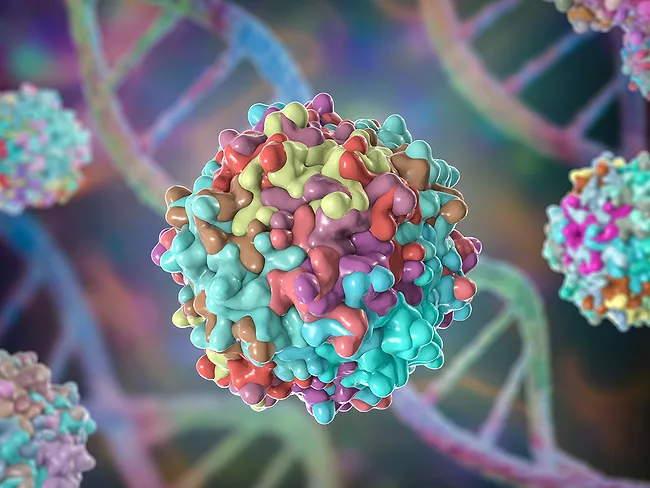
Under a new licensing deal announced July 8, JCR Pharmaceuticals Co. Ltd. granted Alexion Pharmaceuticals Inc. rights to its adeno-associated virus (AAV) capsids for use in up to five of Alexion’s genomic medicines programs.
Manufacturing issues are the latest problem for Ultragenyx Pharmaceutical Inc. to solve after last week’s disappointment in a phase III study to treat brittle bones. The U.S. FDA gave the company a complete response letter (CRL) regarding the BLA for its gene therapy to treat Sanfilippo syndrome type A, saying it needs more details and improvements made about CMC after having finished manufacturing facility inspections.
Under a new licensing deal announced July 8, JCR Pharmaceuticals Co. Ltd. granted Alexion Pharmaceuticals Inc. rights to its adeno-associated virus (AAV) capsids for use in up to five of Alexion’s genomic medicines programs.
In yet another fail for the Duchenne muscular dystrophy (DMD) field, Taiho Pharmaceutical Co. Ltd.’s pizuglanstat (TAS-205) did not meet the primary endpoint in a phase III trial. The phase III Reach-DMD trial, a randomized, placebo-controlled, double-blind and open-label, extension study of pizuglanstat in patients with DMD showed no significant difference in the mean change from baseline to 52 weeks in the primary endpoint of time to rise from the floor in the ambulatory cohort of the study.
Using informed consent to do what Congress couldn’t, the U.S. FDA is flexing its regulatory authority to halt clinical trials that involve sending cells from American patients to China or other adversarial nations for genetic engineering and subsequent infusion back into the patient.
The realignment within the U.S. FDA continued with reports of the removal of two high level executives. When asked by BioWorld if the Center for Biologics Evaluation and Research’s (CBER) Office of Therapeutic Products director and deputy director had been forced out and if so, why, an HHS spokesperson responded on background with a single sentence: “Center directors deserve to be supported by managers that are aligned with aggressive goals to expeditiously advance therapeutics for rare diseases using the gold standard of science.”
With plenty of GLP-1 money to spend, Eli Lilly and Co. is buying Verve Therapeutics Inc. and its gene-editing program for about $1.3 billion. Two of Verve’s one-time treatments are in the clinic. Lead candidate VERVE-102, a gene-editing treatment targeting PCSK9, is in a phase Ib study to reduce cholesterol levels.
How the U.S. FDA might respond became a serious question for Wall Street as Sarepta Therapeutics Inc. made known a second death due to acute liver failure with gene therapy Elevidys (delandistrogene moxeparvovec), cleared for Duchenne muscular dystrophy (DMD). Shares of Cambridge, Mass.-based Sarepta (NASDAQ:SRPT) closed June 16 at $20.94, down $15.24, or 42%, as Wall Street digested the news.
Three months after dosing the first patient with its dual vector gene therapy, Splicebio SL has closed a $135 million series B to fund the phase I/II trial of SB-007 in the treatment of Stargardt’s disease to completion. Other adeno-associated viru gene therapies for the inherited retinal disorder have entered the clinic, but SB-007 is the first with the capacity to deliver a full version of the ABCA4 gene that underlies Stargardt’s.
Children with solid tumors who relapse are being treated with the same chemotherapy they would have been given 40 years ago, as “there have been no major approvals for pediatric solid tumors,” Catherine Bollard, senior vice president and chief research officer at Children’s National Hospital, said at a June 5 FDA roundtable on cell and gene therapies (CGTs). The problem isn’t the science. Bollard said many groups are working on curative CGTs “for these children who have lost all other hope for survival.” The real gap is that “big pharma doesn’t see the business model because it’s a rare disease,” she added.
 RSS
RSS