Korro Bio Inc.’s latest update on RNA editing prospect KRRO-110 may mean one less competitor in alpha-1 antitrypsin deficiency (AATD), and shares of the firm (NASDAQ:KRRO) closed Nov. 13 at $6.50, down $24.92, or 79%. As part of the third-quarter earnings report, Korro said KRRO-110 produced functional protein in AATD patients but fell short of projected levels of functional protein after a single administration.
Engene Holdings Inc.’s protocol amendment to its phase II trial with detalimogene voraplasmid in bladder cancer worked out in a big way, and shares of the firm closed Nov. 11 at $8.82, up $2.81, or 47%. Engene rolled out additional preliminary data from the pivotal cohort of the ongoing Legend study testing the nonviral gene therapy in high-risk, Bacillus Calmette-Guérin-unresponsive non-muscle invasive bladder cancer with carcinoma in situ, with or without concomitant papillary disease.
The U.K. Medicines and Healthcare products Agency (MHRA) has committed to major reforms of how it regulates drugs for rare diseases, making it easier to run clinical trials and get approvals. The new rules will be published in full early in 2026 and come into effect later in the year, but following consultation with industry, academics and patients’ groups, the agency has released a position paper setting out its plans.
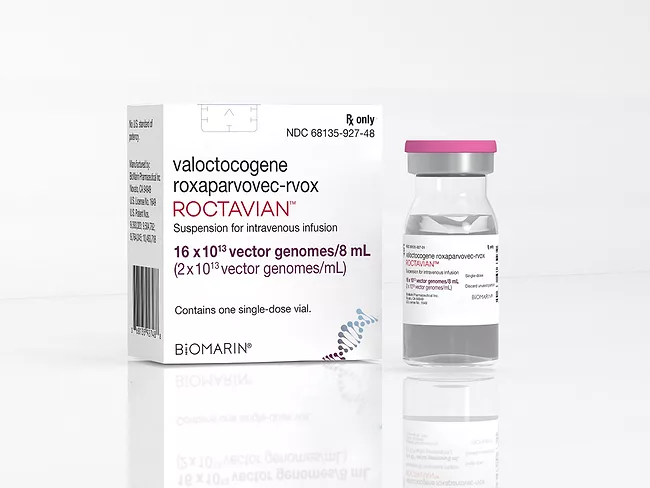
Biomarin Pharmaceutical Inc. plans to divest its pioneering gene therapy for hemophilia, Roctavian (valoctocogene roxaparvovec), and remove what had been considered a potential blockbuster from the portfolio in order to grow the company.
The full rights to Taysha Gene Therapies Inc.’s lead gene therapy candidate are coming back to the company. In 2022, Astellas Pharma Inc. invested $50 million in Taysha for 15% of the company and the exclusive option to license TSHA-102 for treating the rare disease Rett syndrome. That option has expired, according to Taysha.
The U.S. FDA named the first nine recipients of the recently unveiled commissioner’s national priority voucher (CNPV) program aimed at addressing unmet public health needs by shortening regulatory review times to as little as one to two months. For one of those firms, Disc Medicine Inc., which submitted an NDA for bitopertin for rare genetic disorder erythropoietic protoporphyria in September, that could mean a potential approval before the end of 2025.
While recent advances in gene therapy have offered unprecedented options for patients with hemophilia, new data presented at the 32nd Annual Congress of the European Society of Gene and Cell Therapy (ESGCT), held in Seville Oct. 7-10, revealed persistent concerns regarding the durability of these treatments and their potential liver toxicity.
A yearslong bipartisan effort to end the patent-eligibility chaos the U.S. Supreme Court created more than a decade ago could finally come to fruition with the current Congress.
Lexeo Therapeutics Inc. feels like it’s in a faster lane to a BLA for its Friedreich ataxia cardiomyopathy gene therapy after talking with the U.S. FDA. The agency told Lexeo that LX-2006 could be on the accelerated approval path if there is a mingling of the company’s data and studies.
Newco Trogenix Ltd. has emerged from incubation and raised £70 million (US$94.1 million) in a series A, as it prepares the ground for a U.S/U.K. clinical trial of a novel gene therapy construct in glioblastoma multiforme that is due to start at the beginning of 2026.
 RSS
RSS