The U.S. FDA gave Sarepta Therapeutics Inc.’s rAAVrh74 viral vector, used in an investigational gene therapy for the treatment of limb-girdle muscular dystrophy, a step up, making it one of the first platforms to receive the agency’s platform technology designation.
Investors found in an 8-K filing by Intellia Therapeutics Inc. the news of one case of liver-enzyme elevation in the ongoing phase III Magnitude study with nexiguran ziclumeran (nex-z, NTLA-2001), and in reaction pushed shares of the firm (NASDAQ:NTLA) down to close May 29 at $7.45, a loss of $2.21, or 23%, after the stock traded as low as $6.90 during the day.
Rocket Pharmaceuticals Inc. CEO Gaurav Shah said his firm is investigating how its gene therapy for Danon disease may have created an “unexpected and paradoxical” effect that led to problems for a phase II patient who ultimately died.
Gene and cell therapies (GCTs) can target the kidney to treat congenital, acute or chronic diseases affecting this organ. However, its complex structure poses a challenge for these technologies. To be precise and effective in the long term, new approaches should circumvent the specificities of renal tissue, with novel methods of delivery and gene transfer to offer new therapeutic options for patients who lack them.
Rznomics Inc. scored a potential ₩1.9 trillion (US$1.35 billion) global license option agreement with Eli Lilly and Co. to codevelop a novel RNA editing gene therapy to treat hereditary hearing loss.
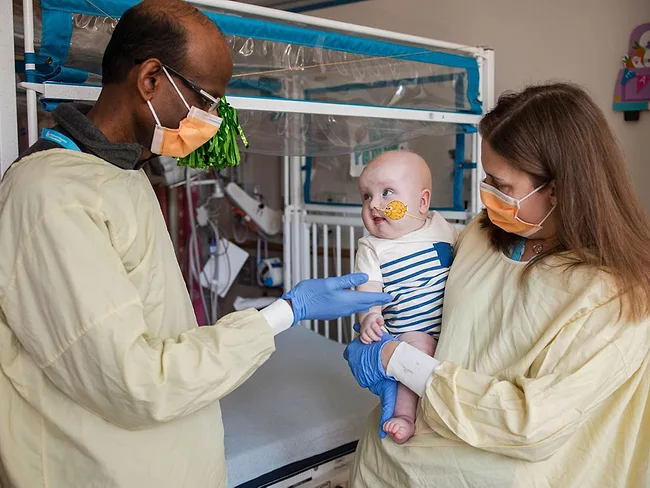
Using a customized gene editing therapy, researchers at the Children’s Hospital of Philadelphia have reported success in treating an infant with a severe metabolic disorder. Kiran Musunuru, Barry J. Gertz Professor for Translational Research in the University of Pennsylvania’s Perelman School of Medicine, presented the case at the American Society of Gene and Cell Therapy’s 2025 annual meeting. The case study was simultaneously published in The New England Journal of Medicine.
Following last fall’s $1 billion development deal with Eli Lilly and Co., precision medicine company Haya Therapeutics SA has raised $65 million in a series A. It’s all part of increased validation from big pharmas that long noncoding RNAs, such as those being developed by Haya, have a strong future.
“I’m a pediatrician in metabolic diseases, and every day in my clinical work I’m confronted with our lack in effective therapies for our patients.” That was the sobering introduction by Sabine Fuchs in her talk at the 2025 Congress of the European Association for the Study of the Liver in Amsterdam this week. The nature of metabolic diseases makes it difficult to develop treatments for them. “There are over 1,500 diseases known by now, and it is just very difficult to develop therapies for each and every individual rare disease.”
The appointment May 6 of Vinay Prasad as the head of the U.S. FDA’s Center for Biologics Evaluation and Research (CBER) “bodes poorly” for Sarepta Therapeutics Inc.’s development-stage pipeline, said Wainwright analyst Mitchell Kapoor – and Wall Street reflected as much, as the stock (NASDAQ:SRPT) ended that day down 26.6% vs. an XBI drop of 6.6% – this ahead of the after-hours earnings disclosure that pushed the Cambridge, Mass.-based firm down even farther by more than another 20%, with the XBI unchanged.
Nuevocor Pte. Ltd. has closed a $45 million series B, enabling it to move lead gene therapy NVC-001 into the clinic in the treatment of an inherited form of cardiomyopathy.

 RSS
RSS