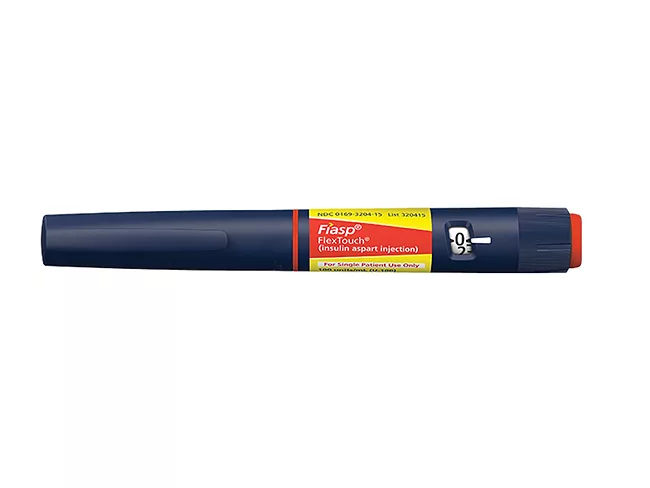
Like the federal district court before it, the U.S. Court of Appeals for the Third Circuit said it lacks jurisdiction to rule on the merits of Novo Nordisk A/S’ claim that the CMS violated the Inflation Reduction Act (IRA) when it treated six of the company’s insulin aspart products as one negotiation-eligible single-source drug.
Phase IIb data of Metsera Inc.’s lead GLP-1 receptor agonist, MET-097i, showed significant weight loss and good tolerability, supporting a phase III start later this year, and validating Pfizer Inc.’s decision a week ago to buy the obesity-focused company for $7.3 billion.
MBX Biosciences Inc. posted positive top-line phase II study data in treating chronic hypoparathyroidism, positioning itself to take on a U.S. FDA-approved therapy for the rare endocrine disease. MBX’s Avail study of canvuparatide hit its primary endpoint in treating adults, demonstrating statistical significance at week 12 and positive six-month results from the open-label extension study. MBX said it is poised to begin a phase III study of once-weekly canvuparatide next year.
The dash for MASH is gaining momentum, with Roche AG acquiring 89bio Inc. and its phase III FGF21 analogue, pegozafermin, for treating metabolic dysfunction-associated steatohepatitis, in a deal worth up to $3.5 billion. The Swiss pharma is to pay $14.50 per share, valuing San Francisco-based 89Bio at $2.4 billion, a premium of approximately 52% to 89bio’s 60-day average price on Sept. 17, 2025. Shares of 89bio (NASDAQ:ETNB) gained $6.88, or 85%, to close Sept. 18 at $14.96.
CSL Ltd. inked a potential $2.1 billion deal with Dutch biotech company Varmx BV to develop VMX-C001 as a new treatment to restore blood coagulation in patients taking a factor Xa inhibitor.
Although cagrilintide from Novo Nordisk A/S proved less than impressive when paired with GLP-1 agonist semaglutide in a single drug known as Cagrisema, the dual long-acting amylin analogue and calcitonin receptor agonist is looking good as a monotherapy in a subanalysis of the phase III Redefine-1 trial.
A recent paper in the Journal of Clinical Medicine quantified some of the potential bodily ravages ahead for patients with hypoparathyroidism (hypoPT), specifically the loss of kidney function, with the risk of chronic kidney disease going up every year by 11%. A handful of drug developers continue to advance prospects in hypoPT, where Ascendis Pharma A/S’ hormone replacement therapy Yorvipath (palopegteriparatide) – the first and only treatment for adults with the rare endocrine disease – has set the bar for efficacy.
Ribomic’s umedaptanib pegol (RBM-007) looks to have some advantages compared to competitors in the achondroplasia space, and the company plans to progress the oligonucleotide-based aptamer that targets anti fibroblast growth factor 2 to phase III trials, Ribomic’s business development head, Kihei Yamashita, told BioWorld.
Eli Lilly and Co.’s regulatory ducks are lined up nicely with the latest positive top-line results from the phase III Attain-2 trial testing orforglipron, an oral glucagon-like peptide 1 (GLP-1) receptor agonist, in adults with obesity or overweight and type 2 diabetes.
Ribomic’s umedaptanib pegol (RBM-007) looks to have some advantages compared to competitors in the achondroplasia space, and the company plans to progress the oligonucleotide-based aptamer that targets anti fibroblast growth factor 2 to phase III trials, Ribomic’s business development head, Kihei Yamashita, told BioWorld.
 RSS
RSS