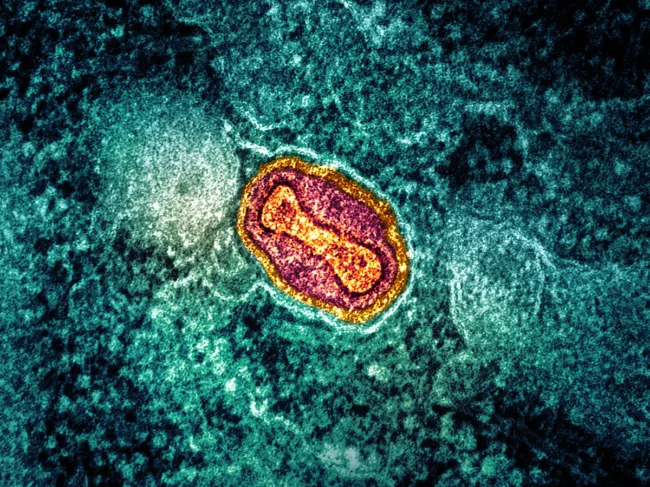
Following the World Health Organization’s escalation of mpox to a public health emergency of international concern on Aug. 14 and the emergence of what appears to be a more severe strain of the orthopoxvirus, the spotlight has focused on a handful of companies working on vaccines and antivirals. Shares of Geovax Labs Inc., Emergent Biosolutions Inc. and Tonix Pharmaceuticals Inc. were all trading up Aug. 19.
As mpox has now been found in the EU, the race for an effective vaccine has accelerated, with a study failure but increased vaccine production from Europe. The U.S. NIH just released top-line results from a preliminary analysis of a placebo-controlled study of Siga Technologies Inc.’s antiviral, tecovirimat, showing it missed the primary endpoint of statistically significant improvement within 28 days post-randomization in time to lesion resolution for patients in the Democratic Republic of the Congo.
With the COVID-19 pandemic still visible in the rearview mirror, the World Health Organization (WHO) is taking no chances as it preps for human avian influenza, or H5N1, a subtype of influenza A.
The 2024 meeting of the International AIDS Society (IAS) is wrapping up as the 2024 Olympic Games are about to begin. That timing was probably what prompted the use of multiple sports analogies at Thursday’s plenary session on HIV prevention strategies. Given the decades-long attempts at developing an HIV vaccine, Peter Piot, past IAS president and director emeritus and professor at the London School of Hygiene and Tropical Medicine, said in his introduction: “This is clearly a marathon. But marathons also finish.”
SK Bioscience Co. Ltd. signed a simple agreement for a future equity (SAFE) deal totaling $2 million with Hingham, Mass.-based Sunflower Therapeutics PBC on July 25 to secure both Sunflower’s equity and its yeast-based protein manufacturing technology. The conditional agreement will grant SK Bioscience future equity rights in Sunflower without the need for immediate valuation, allowing for minimal investment.
Many respiratory syncytial virus (RSV) disease vaccines are for older adults but Merck & Co. Inc.’s monoclonal antibody, MK-1654 (clesrovimab), which just produced positive top-line phase IIb/III data, aims at a far smaller and younger market. Data for protecting healthy preterm and full-term infants from RSV disease show the double-blind, randomized, placebo-controlled clinical trial hit all its primary efficacy and safety endpoints, including the incidence of RSV-associated medically attended lower respiratory infection for 150 days compared to placebo.
The industry is looking, with renewed hope, to the “promise” of messenger RNA (mRNA) therapeutics for a wide range of diseases beyond COVID-19, and not only in vaccine form but also for gene and cell therapies.
Hillevax Inc. is turning its attention to preventing moderate or severe acute gastroenteritis events (AGEs) in adults with norovirus after the phase IIb NEST-IN1 trial testing virus-like particle-based vaccine HIL-214 in infants missed its primary and secondary endpoints, news that sent shares of the company (NASDAQ:HLVX) plummeting 88% to close July 8 at $1.64, a significant drop from the IPO price of $17 two years ago.
Curevac AG is casting off the deadweight of its pandemic push to translate its mRNA technology into a marketed COVID-19 vaccine, in a new €1.45 billion (US$1.6 billion) deal in which GSK plc will acquire full rights to infectious disease vaccines the two were co-developing.
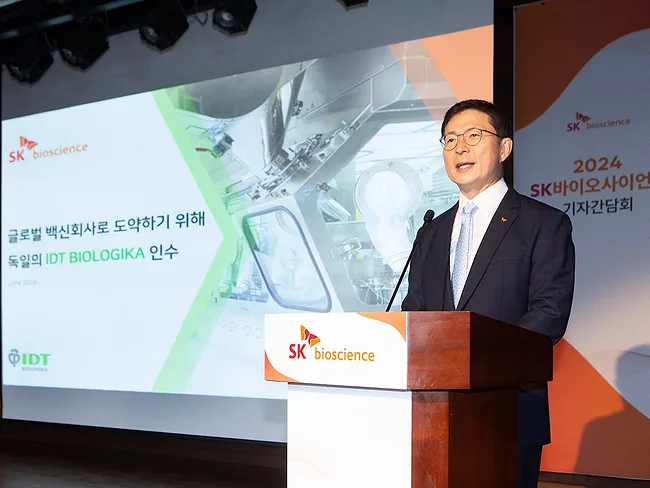
South Korea’s SK Bioscience Co. Ltd. has entered a cross-shareholding acquisition deal with Germany’s Klocke Pharma-Service GmbH to acquire its contract development and manufacturing organization (CDMO), IDT Biologika Corp.

 RSS
RSS