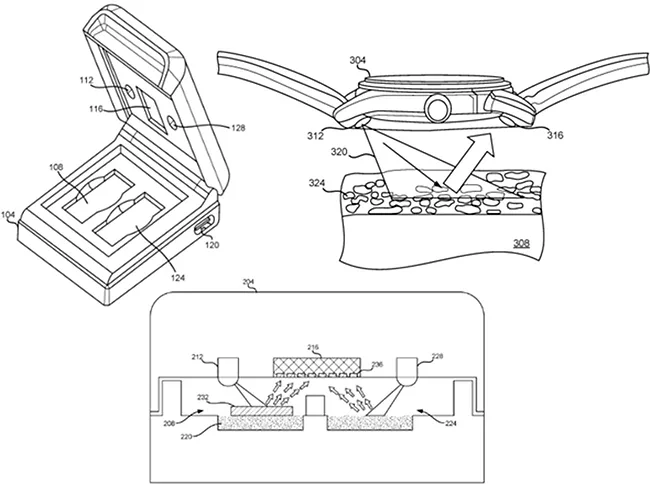
Researchers at the University of California, Davis (UC Davis) have developed a method of biofluid assessment capable of real-time monitoring as well as compatible with machine learning and neural network processing.
Quibim SL and Royal Philips NV have teamed up to utilize their artificial intelligence (AI)-enabled solutions to help clinicians deliver faster diagnosis and treatment of patients with prostate cancer. The partnership will see Philips AI-based magnetic resonance (MR) imaging technology integrated into Quibim’s AI based QP-Prostate software, to automate real-time prostate gland segmentation in MR images, and generate meaningful quantitative insights, as well as standardize MRI prostate exam reporting.
As more and more artificial intelligence (AI)-based solutions get developed to improve patient care, humans should ultimately remain in control because no AI system will be free from mistakes, said Ha Hong, Chief Artificial Intelligence Officer in Medtronic plc’s Endoscopy unit. “There will be some errors, it is simply not possible to create a system that is 100% error free,” he told BioWorld in an interview.
Israeli startup Briya Ltd. raised $11.5 million in series A financing which will support the expansion of its health care data exchange platform across Europe and the U.S. The round was led by Team8, and included existing investors Insight Partners, and Amiti Ventures, and was joined by the George Kaiser Family Foundation.
Proteome analysis with artificial intelligence has made it possible to create a catalog of all possible missense mutations in the human genome to predict diseases.
Proteome analysis with artificial intelligence has made it possible to create a catalog of all possible missense mutations in the human genome to predict diseases. The new Alphamissense tool from the technology company Google Deepmind, available online, will allow scientists to refine diagnoses and design more tailored treatment strategies for patients suffering from pathologies associated with these variants.
The U.K. government continues to pump money into research projects focusing on the use of artificial intelligence (AI) in health care as it looks to technology to help diagnose and treat patients. It provided £2 million (US$2.5 million) in funding to test innovative ways to tackle cancers with poor survival rates.
AI-Stroke SAS is developing an artificial intelligence (AI)-based application able to detect strokes in real time using a simple smartphone or a tablet. The med-tech firm has just won an award in the i-Lab 2023 innovation competition, supported by the French Ministry of Research and sovereign bank Bpifrance SA. “We use the latest AI and computer vision technology to replicate a neurologist’s expertise immediately anywhere, whereas non-specialists can make diagnostic errors up to 50% of the time,” Cédric Javault, CEO and co-founder of AI-Stroke SAS, told BioWorld.
Ibex Medical Analytics Ltd. closed a $55 million series C financing round that will allow the company to expand its footprint in the U.S. to meet the increasing demand for artificial intelligence (AI)-powered diagnostic solutions. Ibex has developed the Galen platform which offers AI solutions that allow pathologists to accurately and rapidly detect and diagnose cancer. The company also reported the launch of Galen Breast HER2, a new software which will play a critical role in helping oncologists identify effective therapies for breast cancer patients.
At the same time it reported U.S. FDA clearance for bedside software to diagnose electrographic status epilepticus (ESE) seizures, Ceribell Inc. declared Claritypro the first ICU monitoring device to receive an NTAP reimbursement from the Centers for Medicare and Medicaid Services. The clearance of Claritypro to diagnose ESE follows receipt of an FDA breakthrough device designation in two different categories in the past year, setting the stage, Ceribell CEO Jane Chao told BioWorld, for expanded access to critical seizure diagnosis technology.
 RSS
RSS