While Europe’s biotech sector continues to face headwinds, med tech appears to be weathering the storm more effectively. Uncertainty in the U.S., heightened competition from China and a persistent lack of capital are all impacting the investment landscape, delegates heard at the LSX Investival Showcase in London.
A rapid diagnostic test from Ocean Dx SAS delivered gold standard performance in a clinical evaluation that points to a potential shift in how sepsis is identified and treated. The assay, which detects more than 1,000 bacterial species directly from whole blood, returned 100% sensitivity and 100% specificity compared with reference blood cultures, with results reported in five hours. Further, the test tripled the number of infections identified.
Fifteen years since the first patient was treated, and after being ditched by two companies, the EMA is recommending approval of Waskyra (etuvetidigene autotemcel), the first gene therapy for treating Wiskott-Aldrich syndrome.
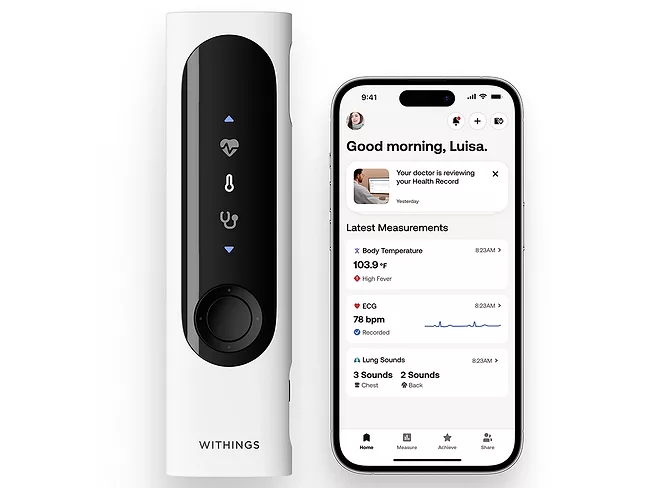
Withings SA received U.S. FDA clearance for Beamo, its health check-up tool designed to monitor heart and lung function. Described as the ‘thermometer of the future’, Beamo combines the sensors of an electrocardiogram, a stethoscope and a thermometer into a hand-held device to allow users to check their body temperature, cardiac and pulmonary health in less than a minute.
Phase III data from Novartis AG for the malaria treatment Ganlum (KLU-156) show it met the primary endpoint of noninferiority to the current standard of care, Coartem, a combination of artemether and lumefantrine. The results are a step to curbing a problem that has seen rising numbers in recent years.
Siemens AG will deconsolidate its remaining 67% stake in Siemens Healthineers AG to a significant minority as it looks to have greater flexibility in capital allocation. The company will transfer 30% of Siemens Healthineers shares to Siemens AG shareholders via a spin-off to unlock long-term value and allow both companies to fully realize their growth potential.
Recent progress in redressing the historical underfunding and neglect of women’s health could be undermined by the backlash against diversity, equity and inclusion (DEI) initiatives, according to executives participating in the FT Global Pharma and Biotech Summit 2025 in London Nov. 11-12.
Minze Health NV signed a three-year agreement with Medtronic plc to bring its Minze Diary Pod, an app-controlled automated urine collection device, to markets across the EMEA region. The partnership aims to enhance the support services available for patients with overactive bladder receiving sacral neuromodulation therapy with Medtronic’s Interstim system.
One of the problems of doing business in the EU is that each member nation has its own more or less unique requirements for clinical trial registration, but the Medical Device Coordination Group may have a solution in the form of a pilot program for harmonized clinical trial registration.
The industry has been complaining about the drug pricing and reimbursement policies of European governments for years, but only now with the Trump administration’s moves to enforce most favored nation (MFN) pricing and reduce the U.S./EU price gap are governments facing up to the reality that they will have to pay more for new drugs.
 RSS
RSS