Like a scene from a movie, a British beauty influencer and a German disabled war veteran could provide just the spark that Europe needs to open its financial heart to med-tech companies in need of love and cash. The Beauty Tech Group, which sells a range of U.S. FDA-cleared aesthetics devices popular with global influencers, raised £106.5 million ($144 million) in an IPO Oct. 3 on the beleaguered London Stock Exchange.
Researchers at Heriot-Watt University received more than £475,000 ($637,000) in funding to advance clinical work on a vibroacoustic sensor which could change how eczema is diagnosed and treated.
The U.K. Medicines and Healthcare Products Regulatory Agency has decided to lean into personalized medicine with the adoption of the concept of a “preference zone” for determining when a therapy can and cannot be used for a specific patient, a concept that is liable to lead to more demanding postmarket surveillance.
Synendos Therapeutics AG has delivered initial clinical data demonstrating the potential of its lead compound to selectively modulate the endocannabinoid system in the brain and to relieve anxiety symptoms without triggering a psychoactive response.
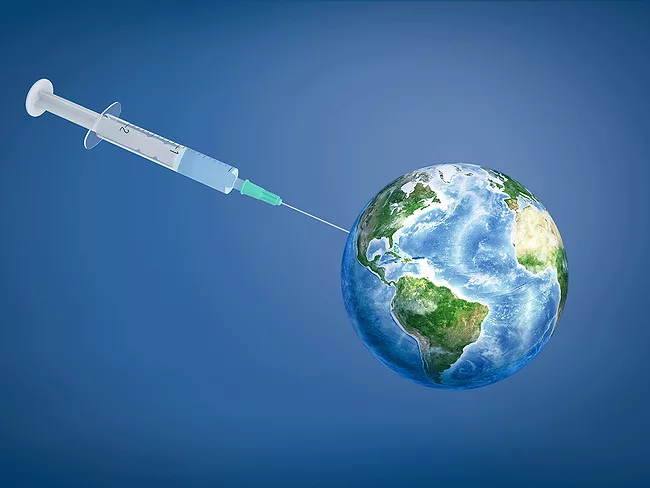
While the discussions and votes at the past two meetings of the U.S. CDC Advisory Committee for Immunization Practices (ACIP) have generated a lot of controversy and resulted in some states and medical groups issuing their own vaccine schedules, the truth is that the newly reconstituted committee’s recommendations to date are still in line with, or more generous in some instances than, global norms.
Pharma companies are collaborating to boost the power of artificial intelligence (AI) in drug discovery by allowing access to proprietary structural data to train a large language model. Each of the partners is contributing data from several thousand experimentally determined protein:ligand interactions, creating one of the most diverse datasets and the richest chemistry assembled to date for model training.
Convatec Group plc plans to invest more than $1 billion in the U.S. and U.K. over the next decade as it looks to accelerate its research and development (R&D) ambitions.
Full-Life Technologies Ltd. announced Sept. 29 the completion of a $77 million financing, comprising $50 million in series C equity and $27 million in debt financing, which will be used to advance a portfolio of radiopharmaceuticals and radionuclide-drug conjugates worldwide.
Pharma companies are collaborating to boost the power of artificial intelligence (AI) in drug discovery by allowing access to proprietary structural data to train a large language model.
Patients with chronic spontaneous urticaria who remain symptomatic despite H1 antihistamine treatment now have a new oral treatment option, with the U.S. FDA’s approval of Novartis AG’s Rhapsido (remibrutinib), a Bruton’s tyrosine kinase inhibitor administered by pill twice daily.
 RSS
RSS