A long-running lobbying effort has paid off, with the announcement of two U.K. government-backed investment vehicles through which pension funds will be able to invest in early stage private life sciences companies.
Foreign investment in China’s biopharma sector is beginning to pick up after the hit of severe pandemic restrictions, and as Western governments look to revive trading relationships following a spate of diplomatic rows. While the geopolitical tensions remain, the mantra from Europe is not to de-couple, but to de-risk. Following a policy review in 2023, the U.K. government position is that a positive two-way trade and investment relationship with China is “mutually beneficial.”
Researchers from the University of Edinburgh seek protection for an algorithm developed using artificial intelligence that could be used by doctors to diagnose heart attacks more quickly and effectively.
The EMA validated two marketing approval applications of Daiichi Sankyo Co. Ltd. and Astrazeneca plc’s antibody-drug conjugate (ADC) datopotamab deruxtecan (dato-dxd) on Mar. 4, for two types of lung and breast cancer.
Exonate Ltd. is preparing to advance its eye drop candidate to treat retinal vascular diseases, EXN-407, into a phase IIb study following promising tolerability and early signs of efficacy in a phase Ib/IIa study. A small-molecule SRPK1 inhibitor, EXN-407 is designed to be administered twice daily and works by selectively targeting specific (proangiogenic) isoforms of VEGF that lead to vascular retinal disease progression via aberrant growth of leaky blood vessels within the eye.
Rhythm Diagnostic Systems SA received CE mark approval from EU authorities for Multisense, a wearable device that continuously monitors patients remotely. The company looks to market the device first in France and Germany.
The EMA validated two marketing approval applications of Daiichi Sankyo Co. Ltd. and Astrazeneca plc’s antibody-drug conjugate (ADC) datopotamab deruxtecan (dato-dxd) on Mar. 4, for two types of lung and breast cancer.
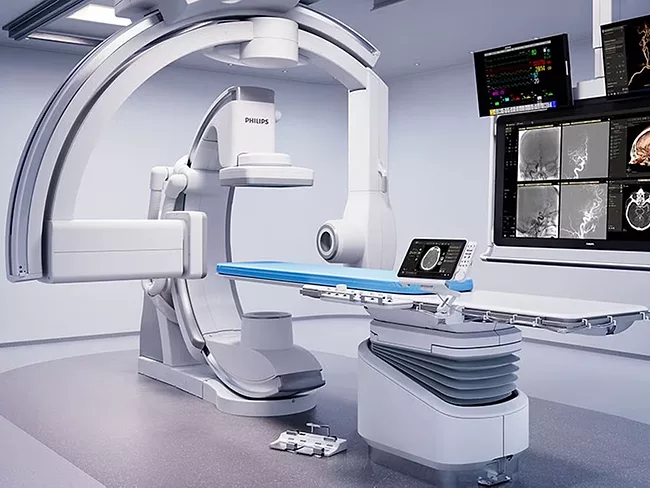
In a sign that Royal Philips NV is not letting the problems in its business in the U.S. stop its innovation, the company has launched the Azurion neuro biplane, a new image guided therapy system for patients suffering from stroke and other neurovascular diseases. It also teamed up with Syntheticmr AB and launched Smart Quant Neuro 3D, an AI imaging tool which will help health care professionals diagnose and assess brain disorders like multiple sclerosis, traumatic brain injury and dementia.
Continuing the spate of regulatory approvals for pulsed field ablation (PFA) devices around the world, Johnson & Johnson’s Biosense Webster Inc. unit secured CE mark for the Varipulse platform for treatment of symptomatic, drug-refractory recurrent paroxysmal atrial fibrillation.
Korean neurodegenerative disease-focused Aribio Co. Ltd. gained the U.K.’s regulatory clearance to start the phase III Polaris-AD trial on AR-1001 (mirodenafil), an investigative therapy for early Alzheimer’s disease (AD). The U.K.’s Medicines and Healthcare products Regulatory Agency gave notice of acceptance to Seoul, South Korea- and San Diego-based Aribio for the clinical study on Feb. 21 after “confirming a favorable ethical opinion,” Aribio said. AR-1001 is an oral phosphodiesterase-5 inhibitor under development to treat early AD.

 RSS
RSS