Device makers know all too well the hazards of liability where their products are concerned, but those liabilities may soon balloon dramatically in the EU. Two pieces of EU legislation are in development, including the AI Liability Directive, which may have the effect of forcing the defendant in a liability case to prove that its product was not the cause of the alleged harm.
The European Union has implemented legislation governing artificial intelligence (AI) with more on tap, but the U.S. has to date lagged in that area. However, the House of Representatives has assembled a bipartisan task force for AI, one of several developments suggesting that 2025 will be an even more AI-focused year than 2024.
Owlstone Medical Ltd. recently secured $27 million in the first close of its series E financing round for clinical trials and product commercialization based on its Breath Biopsy platform technology. The fundraise was led by Ventura Capital, joined by Aviva Ventures, Horizons Ventures and other existing investors.
The EMA has started a review of Novo Nordisk A/S’ GLP-1 receptor agonist, semaglutide, after the Danish regulatory agency raised the possibility it causes an increased risk of suffering from an acute eye condition. After the first report in July 2024, the Danish regulator had received, by Dec. 10, 2024, a total of 19 reports of non-arteric anterior ischemic neuropathy, a rare condition that affects the small blood vessels at the front of the optic nerve. This can lead on to sudden vision loss and visual field defects.
The U.K.’s Buckinghamshire NHS Trust has partnered medical technology design experts from Team Consulting Ltd. to create a tool that can transform burn care treatment. The concept training tool incorporates mixed reality which maps ‘custom digital burns’ onto a mannequin to enable surgeons to explore a diverse range of burn types and patient profiles and deliver better outcomes.
The EMA recommended the highest number of approvals in the last 15 years in 2024, giving the nod to 114 drugs. That is amongst the highest number in the 30 years of the agency’s existence, said Steffen Thirstrup, the EMA’s chief medical officer.
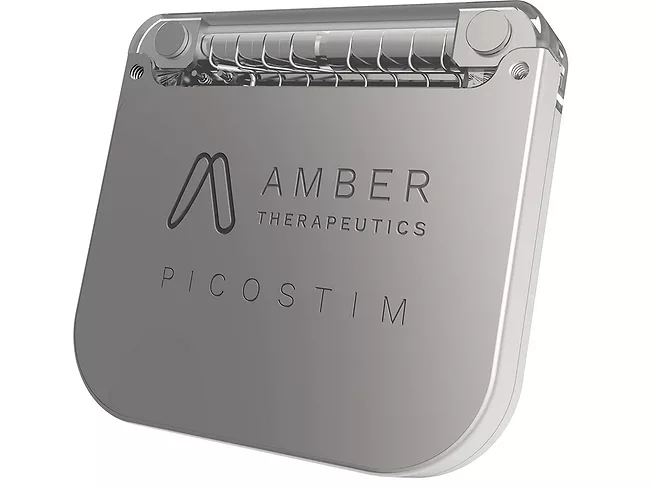
At least half of women experience urinary incontinence at some point in their lives but few discuss the condition with their physicians. In part, that’s because most women believe few effective treatments exist for urinary leakage – and until recently, they were right. Several advances in 2024, however, offer new hope.
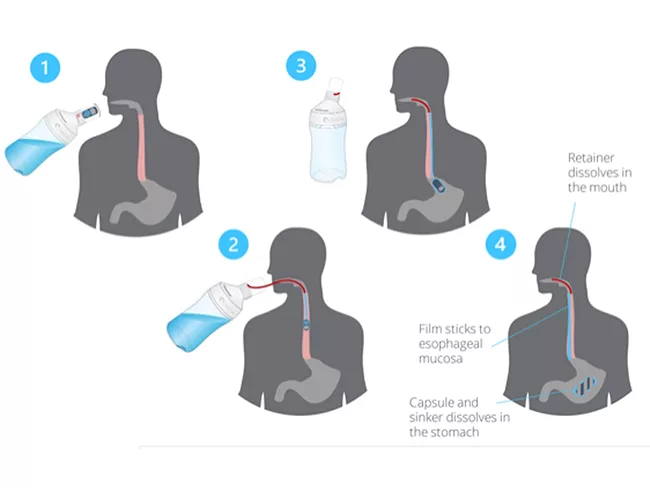
Esocap AG aims to transform the treatment of eosinophilic esophagitis with its drug delivery technology, ESO-101, designed to increase mucosal contact time and drug deposition in the esophagus. Data from the recent ACESO study showed that ESO-101 was safe and well tolerated and improved both histologic and endoscopic outcomes in patients with active eosinophilic esophagitis.
The sedate uptake of pulsed field ablation (PFA) in Europe failed to presage the enthusiasm that drove the technology’s extraordinarily rapid adoption in the U.S. in 2024. Used to treat atrial fibrillation, PFA received its first U.S. FDA approval in Dec. 2023. At the time, Clarivate estimated that PFA had 7% of the global cardiac ablation market. By year-end 2024, it had 20% and Boston Scientific Corp. projected that PFA would represent up to half of the market by the close of 2025.
Qaelon Medical SAS partnered with Caresyntax GmbH, aiming to build the first real-world evidence platform to tackle problems associated with surgical leaks. The companies hope their solution will provide real-time information to surgeons, improving outcomes and making surgery safer for patients.
 RSS
RSS