In divvying up U.S. spending on orphan vs. nonorphan indications for drugs approved for both, a new study could fuel future debates and inform policy on orphan drug incentives. The study, led by a team of University of Michigan and Boston University researchers, found that 21% of the total dollars spent in 2018 in the U.S. on the 15 top-selling partial orphan drugs went to the treatment of rare diseases, while more than 70% went to the treatment of common diseases.
With the FDA’s granting of emergency use authorization (EUA) to Johnson & Johnson (J&J), there is now a third vaccine – and the first requiring only a single shot – against COVID-19 for adult Americans. Though it packs less of an efficacy punch, the EUA allows J&J’s Ad26.COV2.S to join mRNA vaccines from Moderna Inc. and Pfizer Inc./Biontech SE as protection against the virus.
The U.S. Court of Appeals for the Seventh Circuit grappled with whether so-called patent thickets and certain global patent settlements constitute antitrust behavior as it heard arguments Feb. 25 in UFCW Local 1500 Welfare Fund v. Abbvie Inc.
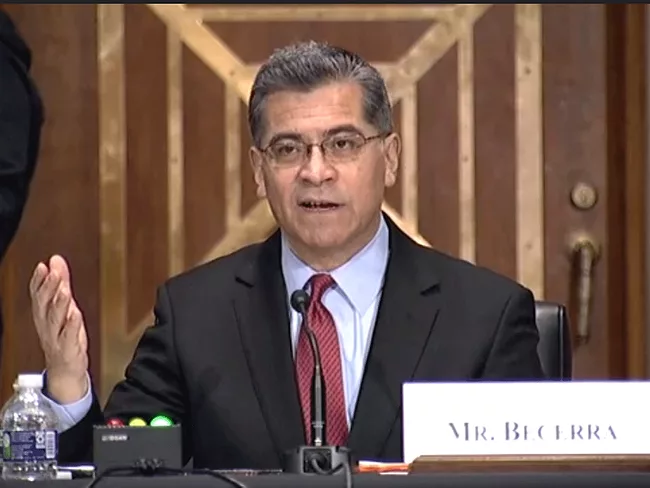
The first Senate hearing for the nomination of Xavier Becerra as Secretary of Health and Human Services included the predictable questions about his qualifications, given his position as attorney general for the state of California. However, the candidate repeatedly emphasized price transparency for both hospitals and drug manufacturers, the latter of which are still laboring under the perception that price gouging is a common practice.
In the shadow of the COVID-19-related deaths of more than half a million Americans and far more deaths across the world, the Biden administration is reportedly rethinking its position on a proposal before the World Trade Organization to waive intellectual property protection for SARS-CoV-2 vaccines.
The U.S. House Energy and Commerce Committee needed two days of hearings to get through a spending measure that provided the FDA with $500 million for its part in the government response. The CDC would receive $7.5 billion for vaccine distribution and tracking, all developments that ran parallel to an announcement that another 200 million doses of vaccine will be delivered by the end of July at a cost of $3.7 billion.
Limited manufacturing capacity, supply chain disruptions and a dearth of personnel with specialized skills are all challenges vaccine makers are facing as they race to produce contracted quotas of COVID-19 vaccines that were developed and authorized in record time.
Preventive medicine hasn’t always had the backing of hard data, but research into genomics at the U.S. National Institutes of Health may soon change that.
Another monoclonal antibody therapy has entered the pandemic fray with the FDA granting emergency use authorization (EUA) for bamlanivimab (LY-CoV555) 700 mg and etesevimab (JS016 or LY-CoV016) 1,400 mg as a cocktail for treating mild to moderate COVID-19 in patients aged 12 and up at high risk for progressing to severe COVID-19 and/or hospitalization.
Among the low-hanging fruit for pruning back U.S. drug prices is the development of generics referencing complex drugs, a category that includes drug-device combination products and nonbiologic drugs with a complex molecular base, route of administration or formulation, such as abuse-deterrent opioids.

 RSS
RSS