As the U.S. House of Representatives resumes work Aug. 23 on a budget reconciliation proposal to get a $3.5 trillion fiscal 2022 budget across the finish line, many lawmakers are looking to provisions to reduce prescription drug prices as a way to pay for increased spending in other health care sectors.
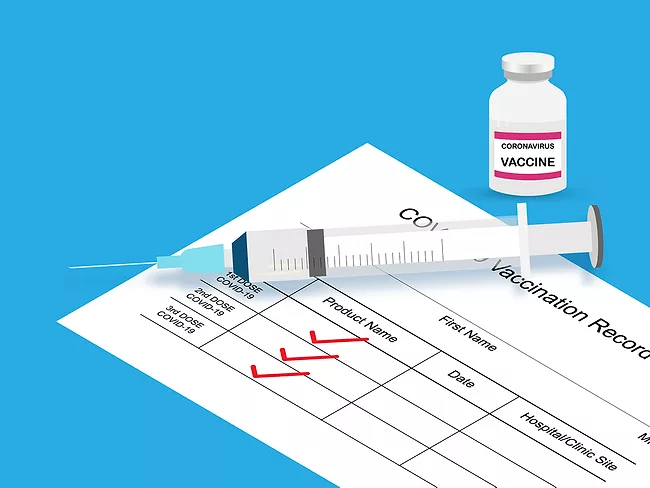
The FDA has granted full approval to Pfizer Inc.’s COVID-19 vaccine in a move that is hoped will convince unvaccinated citizens that the shot is safe and effective. The mRNA vaccine, which will be branded as Comirnaty and was first developed by Germany’s Biontech SE, has been available since Dec. 11 last year under an emergency use authorization (EUA) and is the first to receive the FDA’s full endorsement.
The Biden administration’s rollout of a COVID-19 booster plan before the FDA has even approved a booster admittedly is a “judgment call,” U.S. health officials acknowledged Aug. 18. But rather than a judgment call, “the introduction of booster doses should be evidence-driven and targeted to the population groups in greatest need,” the World Health Organization advised in an interim statement issued a week before the White House COVID-19 Response Team’s announcement.
Plans for offering COVID-19 vaccine booster shots in the U.S. took a big step forward Aug. 18, as Health and Human Services (HHS) public health and medical experts laid out their intention to offer booster shots across the country for people 18 and older beginning the week of Sept. 20 and starting eight months after an individual's second dose.
Voot Yin, co-founder and chief scientific officer of the Bar Harbor, Maine-based Novo Biosciences Inc., reached a settlement with U.S. Health and Human Services’ Office of Research Integrity over allegations that he faked data while conducting government-funded research at the Mount Desert Island Biological Laboratory in Maine.
The U.S. Supreme Court’s decision in the case of U.S. v. Arthrex might be seen as having fully resolved the interaction between the Appointments Clause and the inter partes review (IPR) process, but there are other controversies brewing, nonetheless. Patent attorney James Lovsin, of McDonnell Boehnen Hulbert & Berghoff LLP (MBHB), said on an Aug. 17 webinar that because the current commissioner of patents is only an acting commissioner, his review of IPRs may also be a violation of the Appointments Clause, thus invoking the possibility that some patent cases will be subject to additional administrative delays.
The U.S. Court of Appeals for the Federal Circuit didn’t change a thing in a trio of rulings stemming from Eli Lilly and Co.’s inter partes review challenges of several patents protecting Teva Pharmaceutical Industries Ltd.’s migraine drug, Ajovy (fremanezumab).
As more therapies are approved to treat severe atopic dermatitis, U.S. payers should make available at least one biologic and one JAK1 inhibitor, given how different the drug classes are in their onset of action and their risk profile, a panel of experts recommended at a recent Institute for Clinical and Economic Review (ICER) roundtable.
The HHS Advisory Committee on Immunization Practices that had mixed opinions in June on the necessity of boosters will have a chance to consider new data when it meets again Aug. 24. Since that June adcom, COVID-19 infection rates have risen steadily and the FDA allowed for a third dose of the mRNA vaccines in certain adults with compromised immune systems.
 RSS
RSS