One of the latest state laws impacting prescription drug prices is a per se unconstitutional taking, a U.S. district judge said last week, but he refused to grant a preliminary injunction to shield manufacturers from the effects of Colorado’s new law while Teva Pharmaceuticals USA Inc.’s constitutional challenge moves through the courts.
After flying high in 2022, digital therapeutics (DTx) companies crashed to Earth in 2023 and scrambled to identify a path to profitability, or at least continued viability.
Shares of Corcept Therapeutics Inc. (NASDAQ:CORT) fell 26% Jan. 2 on news that a U.S. court determined that Teva Pharmaceuticals Ltd. does not infringe on patents related to use of cortisol receptor blocker Korlym (mifepristone) in Cushing’s syndrome, opening the possibility of Teva’s generic version to enter the market.
Six months out from the World Health Organization ending the global health emergency brought on by the pandemic, there’s no need for the World Trade Organization to expand a five-year intellectual property (IP) waiver for vaccines to COVID-19-related drugs, devices and diagnostics.
At first glance, the U.S. FDA’s draft guidance for evidentiary expectations for 510(k) implants seems to demand more rigor on these applications, but some in industry believe that several of these elevated requirements offer little or no commensurate benefit. Geeta Pamidimukkala of the Advanced Medical Technology Association (Advamed) said the draft would seem to require that manufacturers preemptively explain the exclusion of animal testing, a requirement she said creates more work for both industry and FDA without offering a meaningful benefit.
The U.S. FDA has commenced with a pilot program for companion diagnostics (CDx) for oncology therapies, which fulfills in part a 2014 agency guidance on the use of CDx. The FDA expects to enroll only nine reference drugs and the associated companion test, but the pilot program is part of the FDA’s controversial attempt to deal with lab-developed tests (LDTs), specifically those tests that are used to determine whether a patient is likely to respond to a particular oncology treatment.
The U.S. Office of Inspector General (OIG) reported that it and Philips Respironics have come to terms over allegations that the company violated the False Claims Act (FCA) by offering free CPAP masks to operators of sleep clinics
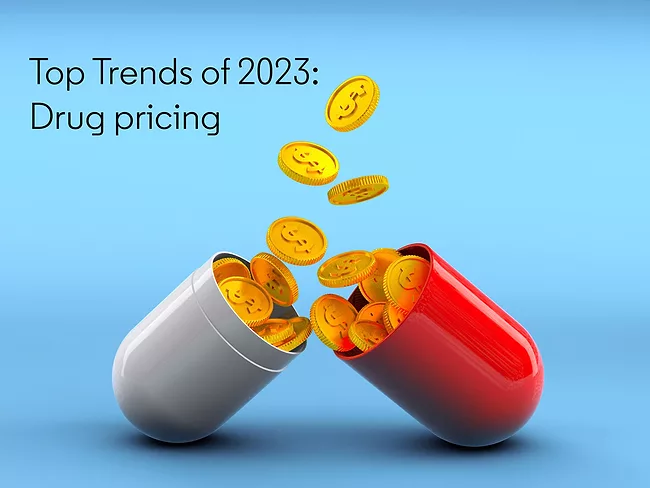
Of all that happened in 2023, Medicare price negotiations probably top the list as the biggest U.S. biopharma disruptor. Although Congress cleared the way for the negotiations last year when it passed the partisan Inflation Reduction Act, they weren’t fleshed out until this year when the Centers for Medicare & Medicaid Services issued guidance detailing the rules of the negotiating road. And as usual, the devil is in the details.
The med-tech industry had high hopes in 2023 regarding Medicare coverage for breakthrough medical devices, but those hopes were dashed when the U.S. Centers for Medicare & Medicaid Services (CMS) withdrew the associated draft rule and will instead issue a “notice” regarding the Transitional Coverage for Emerging Technologies (TCET) concept.
In keeping with a provision in the Inflation Reduction Act, the U.S. Department of Health and Human Services will not implement a final rule removing the anti-kickback safe harbor for the rebates drug companies pay pharmacy benefit managers until Jan. 1, 2032.
 RSS
RSS