The U.S. FDA issued a complete response letter to Shin Nippon Biomedical Laboratories Ltd.’s U.S. subsidiary, Satsuma Pharmaceuticals Inc., for its NDA for dihydroergotamine nasal powder (STS-101) for acute treatment of migraine, with or without aura, in adults. Shin Nippon acquired Satsuma for $220 million in April 2023 and gained rights to STS-101.
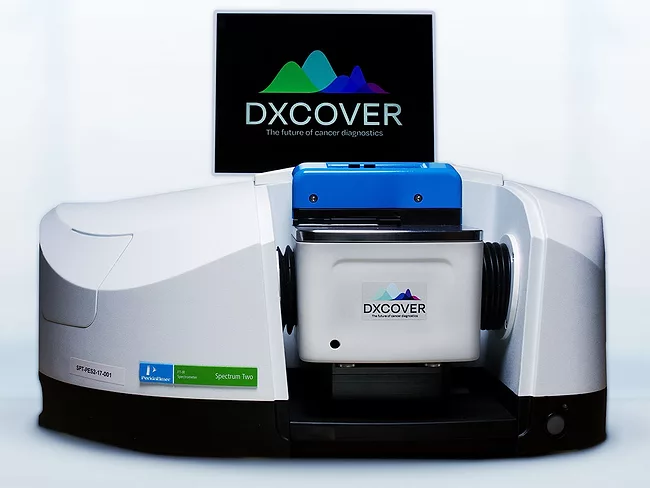
Dxcover Ltd. initiated three pivotal trials to measure the efficacy of its liquid biopsy platform for early detection of brain, colorectal and lung cancers. The company hopes the trials will provide the evidence needed to gain regulatory approval and begin commercial operations of its diagnostic technology in Europe and the U.S.
Sometimes a small change of wording has a big effect on the implications of a U.S. FDA guidance, a notion that may apply to the U.S. FDA’s final guidance for the use of computational modeling in device premarket submissions.
The U.S. FDA’s Jan. 5 approval of Florida’s plan to import prescription drugs from Canada to take advantage of their lower price triggered ongoing communication between senior U.S. officials and Canada’s Ministry of Health over Canadian concerns about maintaining sufficient drug supplies.
U.S. physicians who provide radiation services for cancer patients have a long-running feud with the Centers for Medicare & Medicaid Services over a series of payment rate cuts for their services, but these medical societies are now teaming up to address the issue. These medical societies are making the case that payment reform is not only critical for the future of radiation oncology but are also optimistic that congressional interest in the dilemma has quickened sufficiently to suggest that a congressional response may be on tap in 2024.
The U.S. Centers for Medicare & Medicaid Services (CMS) issued the final rule for data interoperability and prior authorization (PA) for health plans, which is designed in part to improve the PA process used by payers.
Though the PDUFA date for its BLA wasn’t until March 30, 2024, Vertex Pharmaceuticals Inc. celebrated the U.S. FDA approval Jan. 16 for Casgevy (exagamglogene autotemcel), expanding use the CRISPR/Cas9 gene-edited cell therapy in patients, 12 and older, with transfusion-dependent beta-thalassemia.
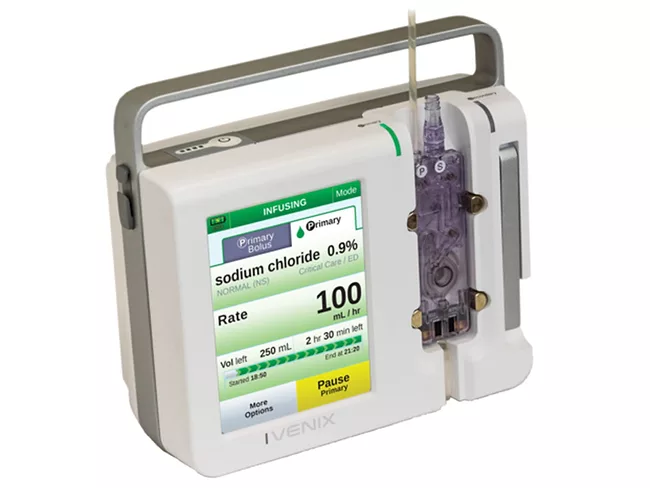
The U.S. FDA has announced a class I recall of Iveninx large-volume infusion pumps made by Fresenius Kabi USA of Lake Zurich, Ill., due to a mechanical issue with fluid valve pins that could cause the pumps to shut down. Fresenius is rolling out a remediation plan for more than 900 pumps affected by the recall, which to date has been associated with no reports of injury or death.
The history of med-tech patent litigation is replete with long-running conflicts that test the willpower of the participants, which increasingly seems to be the case in a series of lawsuits between Masimo Corp. and Apple Inc.
The U.S. Patent and Trademark Office (USPTO) published new enablement guidelines Jan. 10 to provide more consistency across technologies to ensure patent applications truly enable the breadth of their claims in keeping with the Supreme Court’s unanimous decision last year in Amgen Inc. v. Sanofi SA.

 RSS
RSS