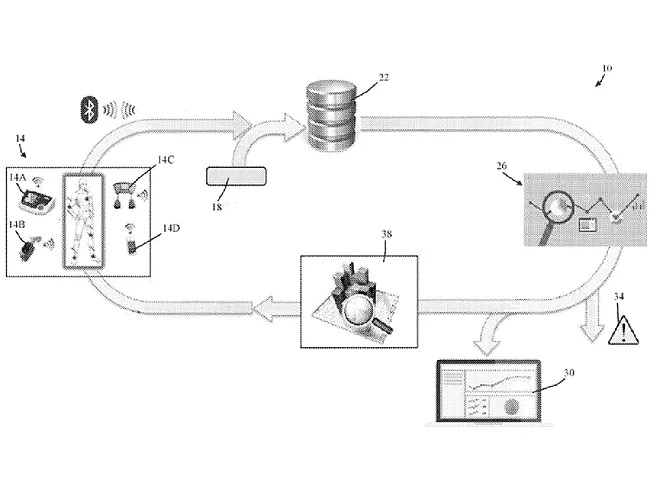
In what represents the first patenting from Immersive Reality Group LLC, the company’s co-founders describe their Intellighealth system for detecting the early onset of respiratory diseases using artificial intelligence and wearable remote health monitoring technologies.
The ongoing controversy over the use of ethylene oxide (EtO) as a medical device sterilant has yielded a certification by the U.S. FDA for hydrogen peroxide as an alternative category A sterilant. The news is a welcome bit of relief for industry and for patients as the Environmental Protection Agency still seems bent on imposing what some in industry see as draconian controls on EtO, which is still employed to sterilize half of all medical devices used in the U.S. each year.
Medtronic plc received the greenlight from the U.S. FDA for its latest deep brain stimulation system, the Percept RC. The rechargeable neurostimulator includes the company’s sensing technology which captures data from brain signals and allows for more personalized therapy.
The U.S. FDA is promising to make 2024 a “breakout” 12 months for gene therapies, with a number of initiatives to promote clinical development, approvals and uptake. “This is a great year to focus on gene therapy,” said Peter Marks, director of the Center for Biologics Evaluation and Research at the FDA. “I just want to focus on moving ahead gene therapy,” he told attendees of the J. P. Morgan Healthcare Conference on Jan. 8.
The U.S. Patent and Trademark Office (USPTO) published new enablement guidelines Jan. 10 to provide more consistency across technologies to ensure patent applications truly enable the breadth of their claims in keeping with the Supreme Court’s unanimous decision last year in Amgen Inc. v. Sanofi SA.
Privacy laws and enforcement in the U.S. are seemingly growing by the week on both the state and federal levels, with the Federal Trade Commission (FTC) serving as one of the players in the federal enforcement game. The FTC has released a statement warning developers of data that are working as model-as-a-service companies to be wary of any illicit uses of data acquired to assist in development of artificial intelligence algorithms, a warning that these developers and their customers would do well to heed.
Ultromics Ltd. joined forces with Pfizer Inc. to expedite U.S. FDA clearance of its artificial intelligence (AI)-enhanced platform to aid early diagnosis of cardiac amyloidosis, also known as stiff heart syndrome. The company received FDA breakthrough device designation last year for Echogo Amyloidosis, which uses deep AI to analyze echocardiograms and detect the presence of cardiac amyloidosis, a serious condition often missed during standard heart assessments.
Listening to conversations between a mother and her unborn child on the cellular level could inform how the pregnancy is going and prevent complications. Three scientific groups from the Eunice Kennedy Shriver National Institute of Child Health and Human Development (NICHD), in collaboration with Wayne State University and Michigan State University, have used single-cell RNA sequencing techniques to decipher these words, identify the cellular language of these interactions in the placenta and establish a cellular atlas.
California’s First District Court of Appeal opened an avenue, in that state at least, for lawsuits against drug and device companies based on their pipeline development priorities.
Industry may still be less than fond of the failure of the term “recall” to distinguish between corrections and market withdrawals, but the class I recall of the Insulet Omnipod 5 app for Android smartphones is a correction of some importance. This recall, one of the first to be announced by the FDA in 2024, addresses a software problem that could lead to overdose of insulin, a potentially lethal problem for which the company has already provided a fix.
 RSS
RSS