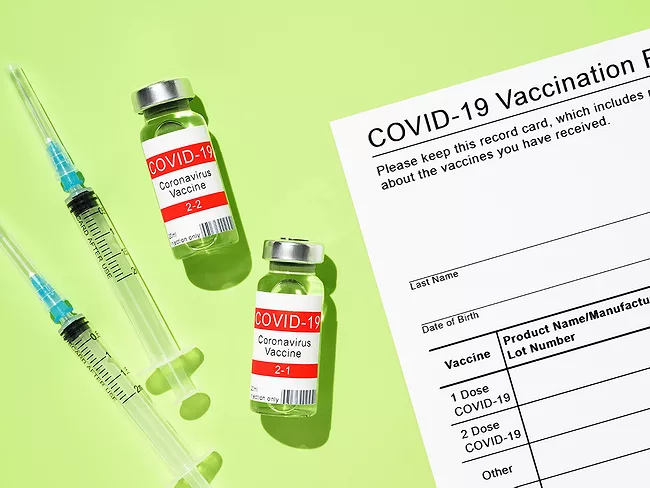
The second day’s meeting of the U.S. CDC’s Advisory Committee for Immunization Practices (ACIP) took up guidelines related to COVID-19 vaccines, of which an outspoken skeptic is Health and Human Services Secretary Robert Kennedy – who in June fired all 17 members of ACIP and replaced them with names more to his liking.
A late-breaking study presented at the PERT Consortium 2025 Pulmonary Embolism Scientific Symposium in San Diego showed marked clot-burden reduction with no device-related serious adverse events for Imperative Care Inc.’s Symphony thrombectomy system, though other companies have a head start. Circulation: Cardiovascular Interventions simultaneously published the study in an article titled “A Prospective Multicenter IDE Study of the Next-Generation Precision Aspiration Thrombectomy System for Intermediate-Risk Pulmonary Embolism: The SYMPHONY-PE Trial.”
“The comment I hear a lot from scientists … is that science has no borders,” Arif Noorani, partner at Sidley Austin LLP, said while addressing the panel audience at Asia Bio 2025 in Singapore. “I agree, but the reality is, we do have a lot of borders.”
Despite some expectations that the U.S. CDC’s Advisory Committee for Immunization Practices (ACIP) would dramatically change the childhood vaccine schedule for hepatitis B, the committee is poised to vote Sept. 19 on a much smaller change that would move the current birth dose to 1 month for infants born to mothers who test negative for hepatitis B.
As Wall Street awaits phase IIb data from Kala Bio Inc. with KPI-012 in persistent corneal epithelial defect, odds are being weighed for that candidate – and others in development – against the lone approved treatment used in a market already worth more than $1 billion.
Mabwell Bioscience Co. Ltd. and Aditum Bio Management Co. LLC announced, in after-market hours Sept. 17, an agreement to forge a new company called Kalexo Bio Inc. and load the biotech with a preclinical dyslipidemia asset via a potential $1 billion global license deal.
The American Academy of Pediatrics (AAP) and a few other medical professional groups were no-shows at the Sept. 18 meeting of the U.S. CDC’s Advisory Committee for Immunization Practices. The absence of the liaison groups was noted, especially that of the AAP. In opening the two-day meeting, ACIP Chair Martin Kulldorff said he lamented that the AAP has ended its association with the committee.
Shape Therapeutics Inc. could bring in as much as $1.2 billion in a new option and license deal with Vectory Therapeutics BV. It’s another collaboration for both companies that are known for working with large and small pharmas. Vectory is getting the exclusive option to evaluate Shape’s brain-penetrating adeno-associated virus capsid, SHP-DB1, against three targets, including mHTT, TDP-43 for Huntington’s disease and phosphorylated tau for Alzheimer’s disease.
The dash for MASH is gaining momentum, with Roche AG acquiring 89bio Inc. and its phase III FGF21 analogue, pegozafermin, for treating metabolic dysfunction-associated steatohepatitis, in a deal worth up to $3.5 billion. The Swiss pharma is to pay $14.50 per share, valuing San Francisco-based 89Bio at $2.4 billion, a premium of approximately 52% to 89bio’s 60-day average price on Sept. 17, 2025. Shares of 89bio (NASDAQ:ETNB) gained $6.88, or 85%, to close Sept. 18 at $14.96.
After a five-year partnership, Senseonics Holdings Inc. and Ascensia Diabetes Care Holdings AG, a unit of Tokyo-based PHC Holdings Corp., agreed to transition worldwide commercialization and distribution of Senseonics’ Eversense 365 implantable continuous glucose monitor back to Senseonics beginning on Jan. 1, 2026.
 RSS
RSS