Concerns over the EU’s agonizingly clunky roll-out of the Medical Device Regulation (MDR) has largely focused on the capacity of notified bodies to manage the task of recertifying CE marks for legacy devices, but a new problem has emerged that promises to add yet more drag to the process. Amie Smirthwaite, senior vice president for innovation at RQM+, said EU member states’ competent authorities seem bent on pressing notified bodies (NBs) to treat guidance by the Medical Device Coordination Group (MDCG) as regulation, with the net result that “you almost need guidance for the guidance” in order to successfully navigate the EU market.
The U.S. FDA 510(k) clearance of Airamed GmbH’s Airascore software could see millions of people benefitting from early accurate diagnosis of Alzheimer’s disease and other types of dementia. Airascore is a medical image management and processing system that uses deep learning and artificial intelligence (AI) to assess brain volumetry data on MRI scans in as little as five minutes.
The U.S. FDA’s final guidance for clinical decision support (CDS) systems may be the subject of two citizen’s petitions requesting the agency scrap the guidance and start over, but that doesn’t mean the agency is not enforcing the terms of the guidance. Danvers, Mass.-based Abiomed Inc., took in a Sept. 19 warning letter stating that the company’s Impella Connect system qualifies as a CDS product because it provides “patient-specific medical information to detect a life-threatening condition,” an interpretation that is sure to intensify the larger debate about whether the CDS final guidance is an extra-statutory exercise in regulatory engineering.
Regulatory snapshots, including global submissions and approvals, clinical trial approvals and other regulatory decisions and designations: Boston Scientific, Intelivation Technologies.
The U.S. FDA’s draft guidance for predetermined change control plans (PCCPs) is one of the more innovative regulatory proposals in recent memory, although the FDA is not statutorily required to limit this policy to artificial intelligence (AI) and machine learning (ML) products. Nonetheless, the PCCP concept is starting to show signs of being consumed by the debate over AI and ML medical software, so much so that industry may be losing sight of the opportunities the PCCP concept offers in other types of medical technologies.
The U.S. FDA’s draft rule for regulation of lab-developed tests (LDTs) was a long time in coming, much longer than any legislative proposals to overhaul the agency’s regulatory mechanisms for these tests. Nonetheless, Scott Whitaker, president and CEO of the Advanced Medical Technology Association (Advamed), believes that the FDA draft rule is likely to prompt Congress to pass the Verifying Accurate, Leading-edge IVCT development (VALID) Act, a development that would truncate an FDA final rule that would almost certainly face litigation.
Regulatory snapshots, including global submissions and approvals, clinical trial approvals and other regulatory decisions and designations: Karius, Neurasignal.
The U.S. FDA’s draft rule for regulation of lab-developed tests (LDTs) carries an exceptionally ambitious timeline of completion and enactment by the time the next user fee agreement kicks in, and some see big problems with the timeline laid out by the agency. However, the FDA’s Elizabeth Hillebrenner said that Congress can tweak user fee legislation such that a specific set of user fee sources kicks in off schedule, thus giving the agency a little more leeway in completing any activity related to the proposed rule.
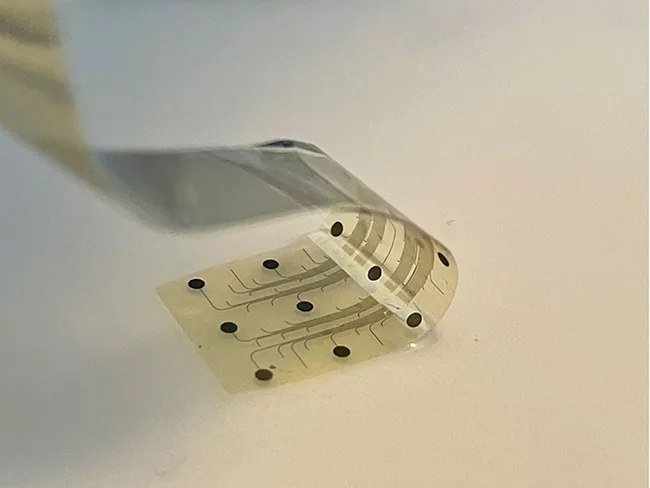
Inbrain Neuroelectronics SL was granted a breakthrough device designation from the U.S. FDA for its graphene-based neural platform as an adjunctive therapy for treating Parkinson’s disease. The platform, called intelligent network modulation system, harnesses the power of graphene and artificial intelligence to deliver highly focused, adaptive neuroelectronic therapy that re-balances pathological neural networks, easing the symptoms of Parkinson’s.
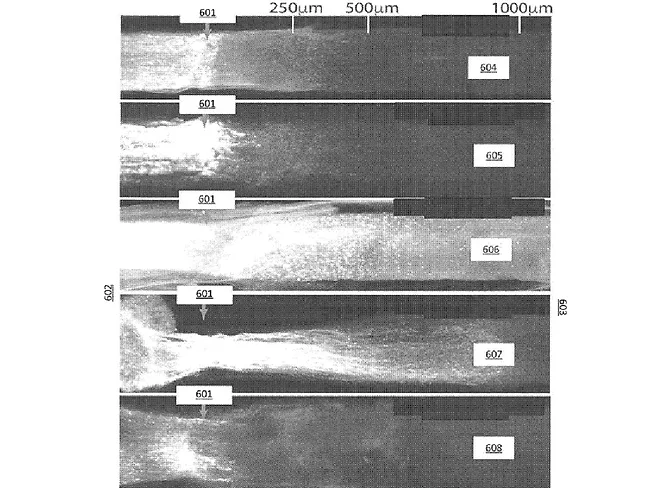
The University of Southern California (USC) reported filing a patent for a retinal ganglion cell (RGC) stimulation system in which electrodes may be placed in, around or near sites of optic nerve injury to generate electric fields that can direct the direction of axonal regeneration.
 RSS
RSS