The U.S. FDA’s draft rule for regulation of lab-developed tests (LDTs) was a long time in coming, much longer than any legislative proposals to overhaul the agency’s regulatory mechanisms for these tests. Nonetheless, Scott Whitaker, president and CEO of the Advanced Medical Technology Association (Advamed), believes that the FDA draft rule is likely to prompt Congress to pass the Verifying Accurate, Leading-edge IVCT development (VALID) Act, a development that would truncate an FDA final rule that would almost certainly face litigation.
Regulatory snapshots, including global submissions and approvals, clinical trial approvals and other regulatory decisions and designations: Karius, Neurasignal.
The U.S. FDA’s draft rule for regulation of lab-developed tests (LDTs) carries an exceptionally ambitious timeline of completion and enactment by the time the next user fee agreement kicks in, and some see big problems with the timeline laid out by the agency. However, the FDA’s Elizabeth Hillebrenner said that Congress can tweak user fee legislation such that a specific set of user fee sources kicks in off schedule, thus giving the agency a little more leeway in completing any activity related to the proposed rule.
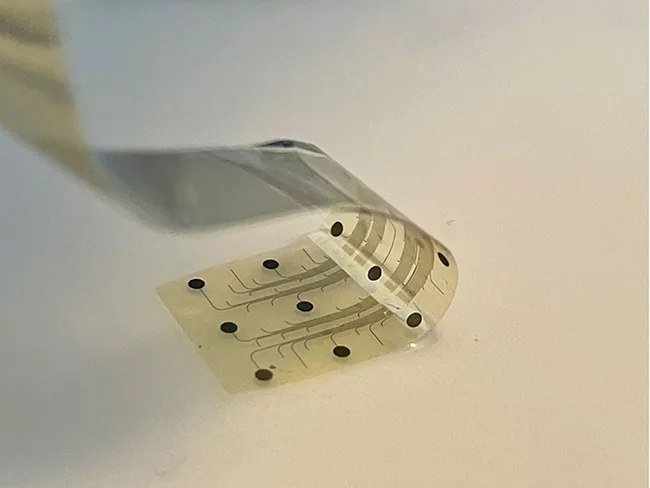
Inbrain Neuroelectronics SL was granted a breakthrough device designation from the U.S. FDA for its graphene-based neural platform as an adjunctive therapy for treating Parkinson’s disease. The platform, called intelligent network modulation system, harnesses the power of graphene and artificial intelligence to deliver highly focused, adaptive neuroelectronic therapy that re-balances pathological neural networks, easing the symptoms of Parkinson’s.
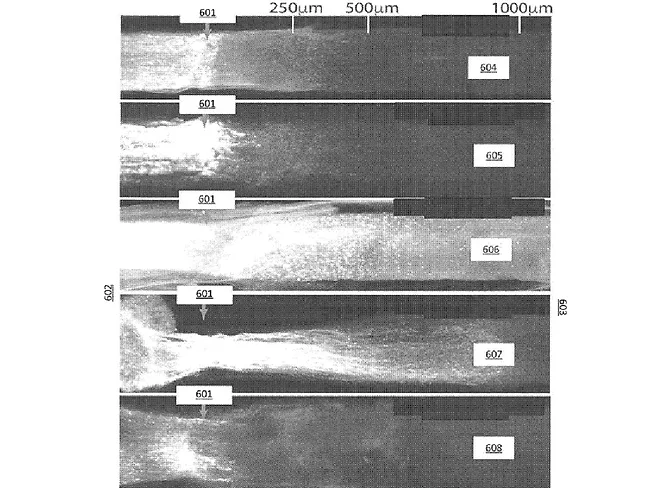
The University of Southern California (USC) reported filing a patent for a retinal ganglion cell (RGC) stimulation system in which electrodes may be placed in, around or near sites of optic nerve injury to generate electric fields that can direct the direction of axonal regeneration.
Regulatory snapshots, including global submissions and approvals, clinical trial approvals and other regulatory decisions and designations: Endotronix, Foundation Medicine, Histosonics, Hyperfine
.
Easymotionskin Tec AG is seeking patent protection for a wearable product that delivers transcutaneous electromyostimulation (EMS) of pelvic floor musculature through the body’s perineum, for the non-invasive treatment of incontinence, particularly stress incontinence. The invention is said to be suited to nearly all patients, including those patients who cannot insert anal or vaginal probes that provide pelvic floor training by EMS.
The U.S. Court of Appeals for the Federal Circuit has once again ruled on a patent dispute between Masimo Corp., of Irvine, Calif., and a rival firm, this time with Sotera Wireless Inc., of San Diego serving as the adversary. The Federal Circuit sided with Sotera in decreeing that 17 claims in Masimo’s RE47,218 (the ’218 patent) are invalidated due to the existence of prior art that rendered the claims obvious, but the irony in this litigation is that one of the patents cited by Sotera as prior art, the 6,597,933 patent, was authored in part by Joe Kiani, the founder, CEO and board chairman of Masimo.
Regulatory snapshots, including global submissions and approvals, clinical trial approvals and other regulatory decisions and designations: Lipgems International, Precision Neuroscience.
Neve Ilan, Israel-based Nano-X Imaging Ltd., had rocked the world of medical imaging with promises of X-ray imaging systems that provide low-cost tomosynthesis, but the U.S. Securities and Exchange Commission says the company overpromised on the low-cost claim. The SEC said the actual production cost of the Nano-X ARC systems is at least double the $12,000 per-unit figure routinely touted by the company’s former CEO, Ran Poliakine, a factual misrepresentation that helped the company raise $165 million in an initial public offering.
 RSS
RSS