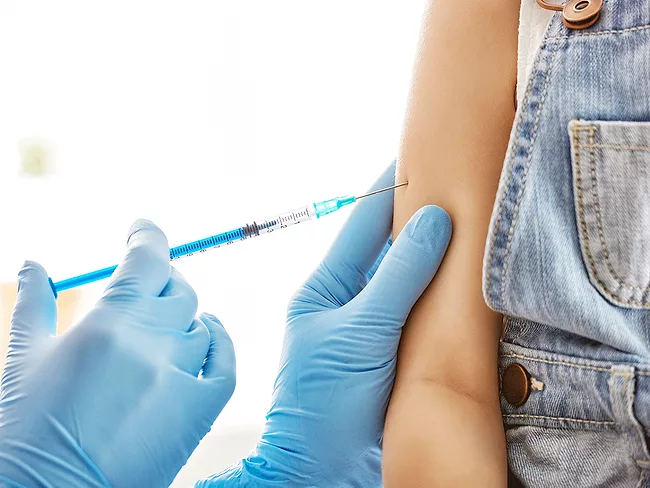
The FDA’s Vaccines and Related Biological Products Advisory Committee (VRBPAC) voted 17-0, with one abstention, that the benefits of Pfizer Inc.-Biontech SE pediatric formulation of its two-dose COVID-19 vaccine outweigh its risks for children ages 5 through 11. Many of those votes came with caveats, as the VRBPAC members struggled with the unknowns of the vaccine and the fear that schools would mandate its use, even though it would still be considered experimental if the FDA grants it an emergency use authorization.
Regulatory snapshots, including global drug submissions and approvals, clinical trial approvals and other regulatory decisions and designations: Alkermes, Arrowhead, Avenue, Bausch, Cardiol, Clearside, Eyenovia, Merck & Co., PTC, Recce, Ridgeback.
The brain-computer interface (BCI) is the subject of keen medical interest for those dealing with neurological damage, but military applications are also a point of interest among a number of national governments. With all this in mind, an agency at the Department of Commerce has posted a request for comments regarding a possible imposition of export controls on BCI devices due to national security concerns, a proposal that could complicate exports of such devices for medical use.
Despite that the device has been available for more than a decade under the 510(k) program, an FDA advisory committee voted narrowly that the benefits of the Surgimend device for breast reconstruction do not outweigh the risks. Another interesting feature of the application is that the pivotal study was based on real-world evidence (RWE), but while the FDA had direct access to the data, Integra Lifesciences Holdings Corp. did not, thus raising questions about whether RWE is necessarily useful for class III device premarket applications.
LONDON – The U.K. Health Security Agency (UKHSA) has designated an offspring of the Delta variant of SARS-CoV-2 as a “variant under investigation” after uncovering some early evidence it may have an increased growth rate.
Regulatory snapshots, including global drug submissions and approvals, clinical trial approvals and other regulatory decisions and designations: J&J, Kintor, Merck & Co., Moderna.
Regulatory snapshots, including global submissions and approvals, clinical trial approvals and other regulatory decisions and designations: Baxter, Biomérieux, Genentech, Naviswiss, Xtrava Health.
LONDON – A new National Security Act coming into force on Jan. 4, 2022, will extend the U.K. government’s power to scrutinize and intervene in foreign acquisitions and bring a swathe of domestic life sciences companies within the ambit of national security legislation for the first time.
Marking September as the second busiest month, 2021 is more than 6% ahead of last year in terms of reported clinical data, although the gap between the two years has narrowed significantly from 26% in April.
DUBLIN – Oncopeptides AB has withdrawn its troubled multiple myeloma
drug Pepaxto (melphalan flufenamide) from the U.S. market, less than eight months after receiving an accelerated approval from the FDA. The move comes less than a week before the FDA’s Oncologic Drugs Advisory Committee was due to consider the drug’s safety profile because of data anomalies that surfaced over the summer.
 RSS
RSS