The U.S. FDA announced a class I recall declared by Baxter Healthcare Corp., of Deerfield, Ill., for the automated compounding inlets used with the company’s Exactomix compounding systems due to the risk of particulate matter in the inlets.
Michelle Tarver, the acting director of the U.S. FDA’s device center appeared on a Sept. 24 webinar to discuss her priorities for the agency going forward, one of which is global health equity.
The U.S. FDA wrapped up the pilot version of the Accreditation Scheme for Conformity Assessment (ASCA) and reported the formation of a permanent ASCA program, which has been seven years in the making.
Avicenna.ai SAS received U.S. FDA clearance for its Cina-Cspine algorithm, which uses machine learning technology to detect and triage cervical spine fractures from computed tomography images. The tool automatically flags imaging findings that are compatible with acute cervical spine fractures, which can cause serious neurological damage or paralysis.
Artificial intelligence is beginning to make its way into the world of medical device design, but Gregg Van Citters, senior consultant at Medicept, told BioWorld that there are both opportunities and tripwires on the road ahead.
Epitomee Ltd. happily swallowed the news of U.S. FDA clearance for its capsule for weight management, an ingestible medical device for adults who are overweight or obese. Designed for use along with diet and exercise, the capsule expands in the stomach to create a feeling of fullness that lasts up to six hours.
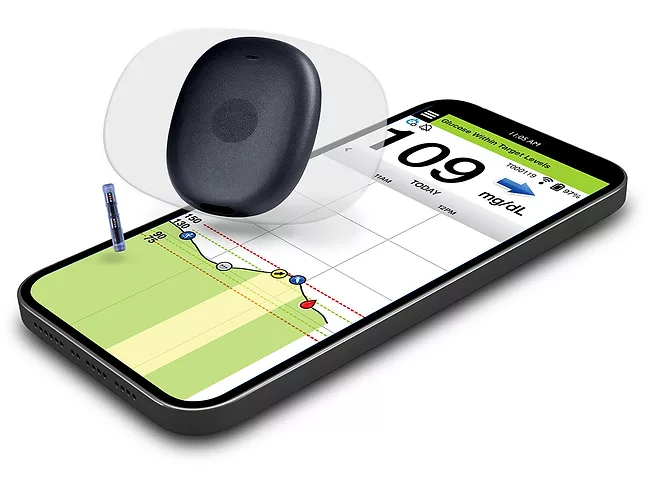
The U.S. FDA cleared Senseonic Holdings Inc.’s Eversense 365, the first continuous glucose monitor to last a full year with a single sensor rather than the 10 days to two weeks typical for wearable sensors such as those offered by Abbott Laboratories and Dexcom Inc.
The U.S. FDA cleared Senseonic Holdings Inc.’s Eversense 365, the first continuous glucose monitor to last a full year with a single sensor rather than the 10 days to two weeks typical for wearable sensors such as those offered by Abbott Laboratories and Dexcom Inc.
The U.S. FDA’s draft guidance for predetermined change control protocols (PCCPs) is out for comment, but a recent agency webinar highlighted some areas of ambiguity.
The U.S. FDA reported Sept. 17 that the Zimmer Biomet Holdings Inc. CPT hip system is associated with an increased risk of thighbone fracture, a problem Zimmer acknowledged with a July 2, 2024, class II recall.
 RSS
RSS