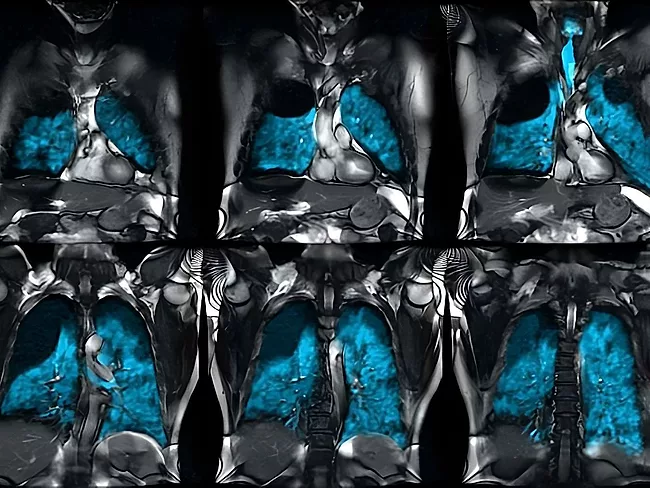
The U.S. FDA has approved Polarean Imaging plc’s drug-device combination product, Xenoview, for use with magnetic resonance imaging (MRI) in evaluating lung ventilation in adults and children aged 12 and older. The hyperpolarized contrast agent, which is prepared from the Xenon Xe 129 gas blend, is expected to be commercially available in the U.S. starting next month.
Tucked into the 4,155-page, $1.7 trillion spending bill for fiscal 2023 that U.S. President Joe Biden signed into law Dec. 23 is a small provision that may have outsized impact on future biosimilar and other drug development. Championed by lawmakers on both sides of the political spectrum, the provision modernizes the data that can be used to support drug development, including alternatives to animal studies.
Transcode Therapeutics Inc. has received clearance from the FDA to proceed with a first-in-human phase 0 trial of TTX-MC138 in cancer patients with advanced solid tumors. A single dose of radiolabeled TTX-MC138 will be followed by noninvasive PET-MRI to quantify the amount of radiolabeled TTX-MC138 delivered to metastatic lesions.
The U.S. FDA managed to wrap up a guidance for clinical decision support (CDS) products after several years, one of several projects the agency was liable for in the area of digital health. While a much-needed draft guidance for change control for artificial intelligence algorithms made the guidance agenda for the FDA’s new fiscal year, that draft is only a B draft guidance priority, suggesting that a final guidance might not emerge until calendar year 2024, possibly later.
Tucked into the 4,155-page, $1.7 trillion spending bill for fiscal 2023 that U.S. President Joe Biden signed into law Dec. 23 is a small provision that may have outsized impact on future biosimilar and other drug development. Championed by lawmakers on both sides of the political spectrum, the provision modernizes the data that can be used to support drug development, including alternatives to animal studies.
Despite pipeline setbacks in 2022, TG Therapeutics Inc. ended the year on a positive note, with U.S. FDA approval of its glycoengineered CD20 monoclonal antibody, ublituximab, in relapsing multiple sclerosis (MS). Branded Briumvi, the drug is set to go up against approved anti-CD20 antibodies Kesimpta (ofatumumab, Novartis AG) and Ocrevus (ocrelizumab, Roche Holding AG).
Janux Therapeutics Inc. has announced that it has submitted an IND application to the FDA for JANX-008, an epidermal growth factor receptor (EGFR)-tumor-activated T cell engager (TRACTr) in development for the treatment of EGFR-expressing solid tumors, including non-small-cell lung cancer (NSCLC), colorectal cancer (CRC), renal cell carcinoma (RCC), and squamous cell carcinoma of the head and neck (SCCHN).
Deka Biosciences Inc. has submitted an IND application to the FDA for its lead oncology asset, DK2-10 (EGFR). DK2-10 (EGFR) is the first of many experimental therapeutics developed as part of Deka’s platform of molecules, with each Diakine in Deka's platform consisting of two complementary cytokines coupled together via attachment to a single chain variable fragment, enabling the cytokines to accumulate more specifically in targeted tissues.
Continuous positive airway pressure (CPAP) devices made by Philips Respironics Inc. are still presumed by the U.S. FDA and other regulators to present a health hazard to patients, but the company’s latest data seem to suggest otherwise. In a Dec. 21 statement, the Royal Philips subsidiary said that testing suggests no appreciable harm to health related to particulate matter emissions from the polyester-based polyurethane (PE-PUR) foam in these devices, and that there is no evidence of long-term harm associated with volatile organic compounds (VOCs), both of which are conclusions with which the FDA may not agree.
Two weeks ahead of its Jan. 6, 2023, PDUFA date, the U.S. FDA has approved the bispecific Lunsumio (mosunetuzumab) to treat adults with relapsed or refractory follicular lymphoma (FL) after two or more lines of systemic therapy. It’s the first bispecific antibody approved for treating any type of non-Hodgkin lymphoma (NHL). FL is the most common slow-growing form of NHL.
 RSS
RSS