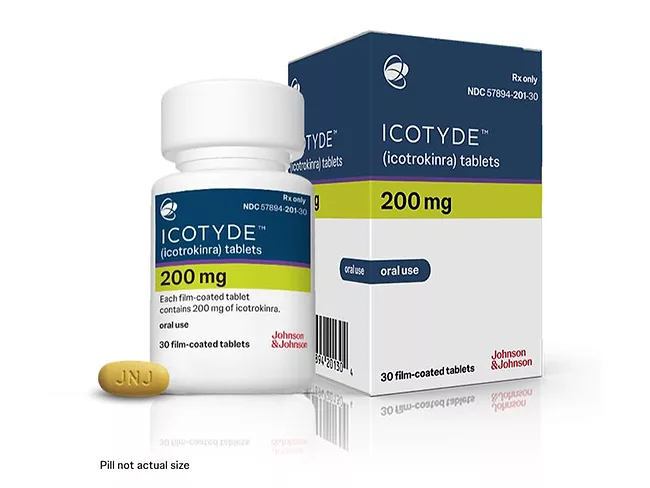
Awaiting the potential U.S. FDA approval of a second product this year, Protagonist Therapeutics Inc. with partner Johnson & Johnson won the go-ahead for oral peptide Icotyde (icotrokinra), an IL-23 receptor antagonist, to treat moderate to severe plaque psoriasis in adults and pediatric patients 12 and older who weigh at least 40 kg and who are candidates for systemic therapy or phototherapy.
Innorna Co. Ltd. has obtained IND clearance from the FDA for IN-026, enabling the company to initiate a phase I study of this mRNA-based therapy for refractory gout.
It’s déjà vu all over again for Aldeyra Therapeutics Inc., which disclosed its third complete response letter (CRL) for dry eye disease candidate reproxalap, with the U.S. FDA citing a lack of substantial and consistent evidence of efficacy.
The GLP-1 fight has moved from injectables to pills, and Structure Therapeutics Inc. is in the ring with phase III-ready aleniglipron. According to the Bay Area biotech, its oral once-daily glucagon-like peptide-1 (GLP-1) drug candidate, aleniglipron, demonstrated an absolute weight loss of “up to 39 pounds” in the 44-week Access II trial.
Shanghai Unixell Biotechnology Co. Ltd. has obtained IND clearance from the FDA for UX-GIP001, its iPSC-derived allogeneic cell therapy for focal epilepsy. A phase I study will evaluate UX-GIP001 in patients with drug-resistant epilepsy.
The U.S. FDA has begun moving its patchwork of adverse event (AE) reporting systems into a single, intuitive AE platform that will cover all its centers.
The strife-marked Duchenne muscular dystrophy (DMD) space drew forth another outspoken political figure in the shape of Sen. Ron Johnson (R-Wisc.), who said he was “enraged” by the U.S. FDA’s refusal to consider PTC Therapeutics Inc.’s Translarna (ataluren) for the treatment of nonsense mutation disease.
Rapport Therapeutics Inc. added $20 million to its cash runway for its lead phase III oral seizure drug, RAP-219, through a potential $328 million license deal signed with Tenacia Biotechnology Co. Ltd.
In releasing its latest revision of a draft guidance on biosimilars and interchangeable biosimilars, the U.S. FDA took another step in streamlining the development of the follow-ons by easing unnecessary clinical pharmacokinetic testing involving comparator biologics approved outside the U.S.
Fast on the heels of the U.S. FDA’s go-ahead regarding the expanded use of Wellcovorin (leucovorin) tablets for cerebral folate deficiency in adult and pediatric patients with a confirmed variant in the folate receptor 1 gene – some of whom bear “autistic features” as part of their condition – the American Academy of Pediatrics advised against giving the drug to children with autism spectrum disorder.
 RSS
RSS