At the recently concluded European Association for the Study of the Liver meeting, presentations underscored how increasingly granular insights into liver pathobiology are driving the rapid identification of new druggable targets across diverse indications.
Currently available treatments for chronic hepatitis D virus (HDV) infection rarely result in a cure after a defined treatment period. Researchers from Aligos Therapeutics Inc. hypothesized that antisense oligonucleotides (ASOs) targeting HDV RNAs may inhibit intracellular HDV RNA amplification.
Progressive familial intrahepatic cholestasis type 3 (PFIC3) is a genetic liver disorder caused by mutations in the ABCB4 gene encoding multidrug resistance protein 3 (MCP3) in humans, a biliary phospholipid transporter. Rectify Pharmaceuticals Inc. has developed the novel compound RTY-694, a dual-acting MDR3/BSEP positive modulator that increased the protein function of both MDR3 and BSEP.
Anti-PD-1/PD-L1 therapy has shown success in the treatment of liver cancer and may reverse immune tolerance in chronic hepatitis B (CHB). Aligos Therapeutics Inc. has presented preclinical data on the characterization of ALG-093940, a small molecule PD-1/PD-L1 inhibitor that induces PD-L1 dimerization and degradation.
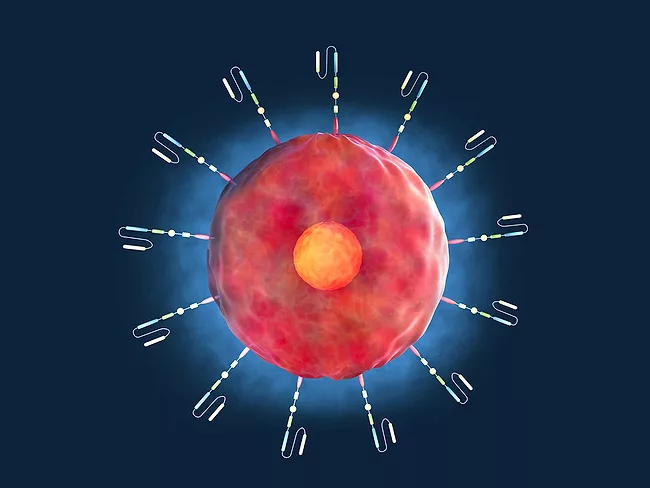
At the ongoing European Association for the Study of the Liver 2026 annual meeting in Barcelona, researchers from Oricell Therapeutics Co. Ltd. presented data on a CAR T-cell approach targeting glypican 3 (GPC3) – OriC-902 – for the treatment of GPC3+ hepatocellular carcinoma (HCC).
With a historic WHO resolution adopted this week giving countries, for the first time, a mandate to address liver disease affecting 1.5 billion people worldwide, this momentum is strongly reflected at the ongoing European Association for the Study of the Liver 2026 congress in Barcelona. The mandate positions liver disease alongside cancer, cardiovascular disease and diabetes as a core global health priority.
X-linked Alport syndrome is an inherited kidney disease caused by pathogenic mutations in the COL4A5 gene. Patients develop hematuria, proteinuria and kidney function decline leading to end-stage renal disease. Nionyx Bio Inc. has developed ONYX-101, a novel kidney-targeting therapeutic designed to ensure durable COL4A5 restoration through dual-vector AAV delivery using NYX capsids that were optimized for kidney targeting.
Kolon Life Science Inc. is developing KLS-3021, a next-generation oncolytic vaccinia virus designed to express the PH20, IL-12 and PD-1-Fc transgenes to mediate receptor-independent tumor cell killing and enhance antitumor immune responses.
Cell therapy based on fibroblasts has shown promise in the treatment of psoriasis due to immune modulation capability and strong expansion when cultured. Work at Fibrobiologics Inc. has focused on the impact of culture format and donors of human dermal fibroblasts (HDFs) on the therapeutic efficacy and immune responses in murine models of psoriasis.
Fabry disease is a lysosomal storage disease tied to the X chromosome and caused by pathogenic variants in the GLA gene encoding galactosidase A. It is characterized by progressive accumulation of galactosidase A substrates, including Gb3 and lyso-Gb3, mainly in the kidney, heart and nervous system.
 RSS
RSS