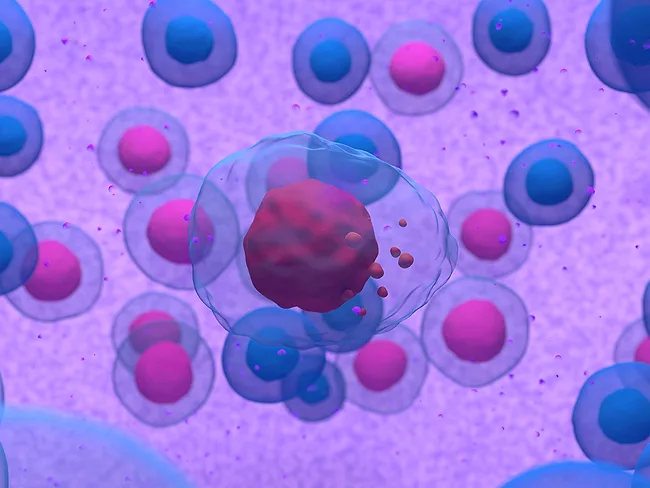
Type 1 diabetes mellitus (T1DM) is an autoimmune disease in which the person’s immune system destroys its own pancreatic islet cells that leads to complete loss of insulin production. Allogeneic pancreatic islet cell transplantation has been shown to replenish the vanished β-cell population and provide glycemic control, restoration of hypoglycemia awareness, and protection from severe hypoglycemic events. However, with allogeneic transplantation, there is a need for life-long immunosuppression to protect the islet grafts from allo- and autoimmunity.
Antitumor immunotherapy has notched big wins, but in a small proportion of patients. And one possible explanation for why is that approved immunotherapies are not yet planting their flag on most of the battlefields where tumors and the immune system engage in combat. At the opening AACR 2023 plenary session, Ralph DeNardo celebrated the successes of the current, mostly T-cell-based approaches, but also encouraged his colleagues to think more broadly about the antitumor immunity.
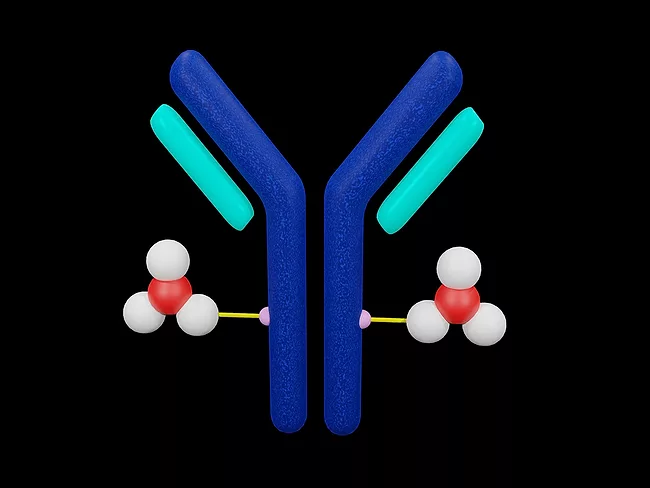
HER2 is a member of the epidermal growth factor receptor family that is overexpressed in approximately 20% of breast cancers. Trastuzumab, an anti-HER2 antibody discovered 25 years ago has become the standard of care treatment due to its beneficial results.
East China University of Science & Technology has described pteridinone derivatives acting as epidermal growth factor receptor (EGFR; HER1; erbB1) (mutant) inhibitors reported to be useful for the treatment of cancer.
Researchers from the Institute of Zoology Guangdong Academy of Sciences have reported on the discovery and preclinical evaluation of a series of diaryl heterocyclic analogues with antiproliferative activities that led to the identification of [I] as the compound with the highest antiproliferative activity, yielding IC50 values of 2.65 μM against HCT-116 colon cancer cell lines comparable to combretastatin A-4 (Ca-4), a tubulin inhibitor with potent anticancer activities.

 RSS
RSS