Colorectal cancer remains a prevalent and deadly form of cancer. A significant challenge to treating colorectal tumors is the creation of a suppressive tumor immune microenvironment that leads to tumor progression and resistance to immunotherapy.
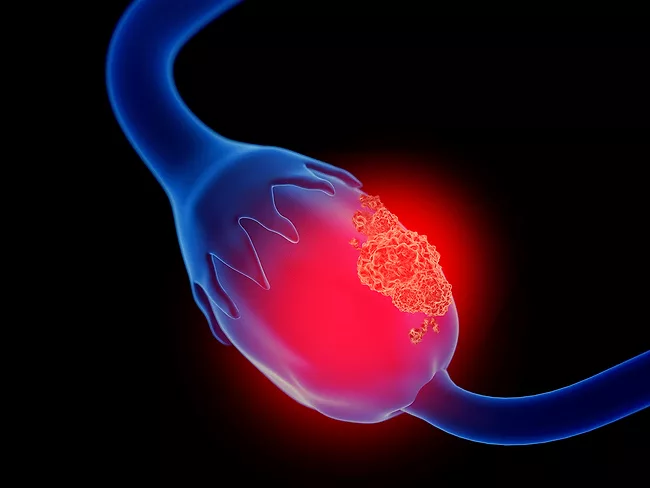
Cancer cells often use epigenetic changes to resist treatment, a major factor particularly in late-stage deaths from ovarian cancer. One potential epigenetic marker, DNA secondary structures known as G-quadruplexes (G4s), has recently gained attention; however, their presence and role in ovarian cancer had not been studied until now.
Immune evasion continues to limit the effectiveness of cancer immunotherapies. Among emerging regulatory molecules, transfer RNA-derived small RNAs (tsRNAs of 13-48 nucleotides), generated through tRNA cleavage, are gaining attention for their roles in controlling gene expression at both the transcriptional and translational levels. Recent research suggests that abnormal tsRNA expression is closely associated with the development and progression of colorectal cancer.
Interleukin-18 (IL-18) is a pro-inflammatory cytokine that plays a crucial role in promoting antitumor immunity by activating T and natural killer (NK) cells. However, the therapeutic use of wild-type IL-18 has faced limitations due to its susceptibility to neutralization by IL-18 binding protein (IL-18BP), short in vivo half-life and unfavorable physicochemical properties.
Forx Therapeutics AG has discovered new bicyclo heteroaryl poly(ADP-ribose) glycohydrolase (PARG) inhibitors reported to be useful for the treatment of cancer.
Hanmi Pharmaceutical Co Ltd. has synthesized new heterobicyclic compounds acting as transcriptional coactivator YAP1/transcriptional enhancer factor (TEAD) interaction inhibitors and reported to be useful for the treatment of cancer.
Colorectal cancer (CRC) accounts for 9.3% of cancer-related deaths worldwide. The levels of circulating immune cells in patients with CRC have been reported to undergo significant alterations, concretely in lymphocyte subsets.
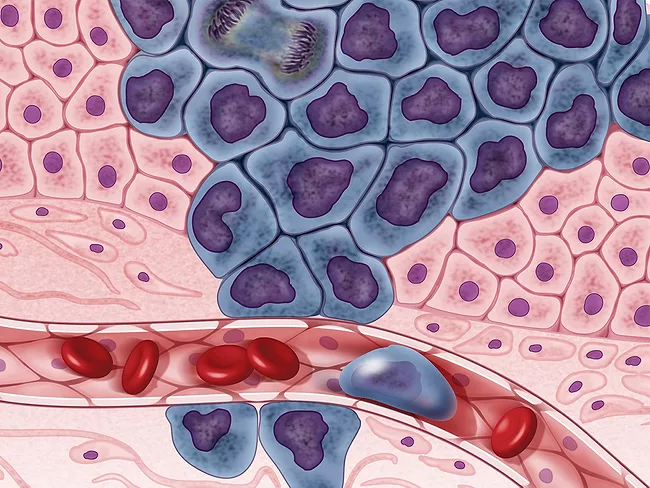
In the current landscape of cancer research, much attention is focused on the tumor microenvironment (TME) at both the primary site and established metastases. However, the early micrometastatic niche remains poorly understood. Researchers from the Hospital del Mar Research Institute (HMRI) have pinpointed T cell immunoglobulin and mucin domain 3 (TIM3) as a key vulnerability in tumor micrometastasis, revealing a new target to halt metastatic progression at its origin.
Compounds acting as histone acetyltransferase KAT6A (MOZ; MYST-3) and KAT7 (HBO-1; MYST-2) inhibitors are reported in an Ideaya Biosciences Inc. patent as potentially useful for the treatment of cancer.
 RSS
RSS