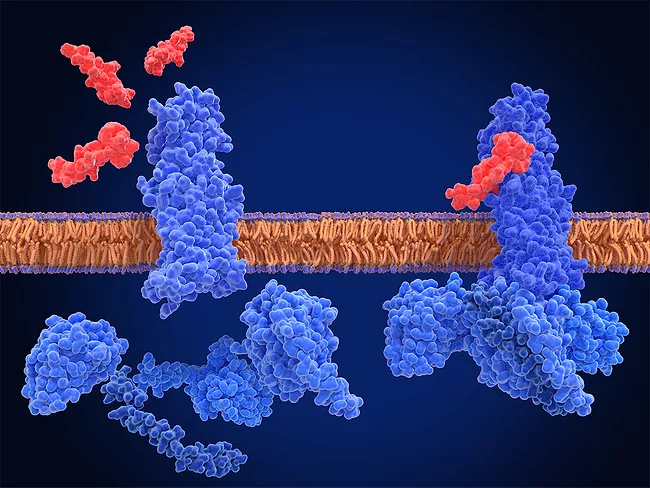
Yuhan Corp. has discovered glucagon-like peptide 1 receptor (GLP-1R) agonists reported to be useful for the treatment of obesity, diabetes, hypertension, hyperlipidemia, hypoglycemia, coronary artery disease, chronic kidney disease and cardiovascular disorders, as well as hepatic steatosis and alcoholic fatty liver disease.
Omass Therapeutics Ltd. has described new melanocortin MC2 receptor antagonists reported to be useful for the treatment of congenital adrenal hyperplasia, Cushing syndrome, depression, ectopic ACTH syndrome, polycystic ovary syndrome and septic shock.
Congruence Therapeutics Inc. has closed a $39.5 million financing to advance into its portfolio of small-molecule correctors for diseases of protein misfolding into the clinic.
Kalohexis LLC has launched as a spin-out from Endevica Bio Inc. with the goal of advancing the clinical development of a portfolio of drug candidates harnessing the melanocortin system for the treatment of metabolic disorders such as obesity and cancer cachexia.
Innorna Co. Ltd. has obtained IND clearance from the FDA for IN-026, enabling the company to initiate a phase I study of this mRNA-based therapy for refractory gout.
Neurodegenerative disease and cognitive decline cannot be explained by a single process. Beta-amyloid plaques, hyperphosphorylated tau, alpha-synuclein, activated microglia and astrocytes, altered receptors such as TREM2, mitochondrial dysfunction, epigenetic changes and cerebrovascular alterations all seem to contribute to the development of dementia in Alzheimer’s disease (AD). While scientists attempt to address each of these elements, prevention is growing as a primary goal.
Gasherbrum Bio Inc. has discovered new glucagon-like peptide 1 receptor (GLP-1R) agonists. They are reported to be useful for the treatment of type 2 diabetes, dyslipidemia, hyperglycemia, hypertension, obesity and more.
An F. Hoffmann-la Roche Ltd. and Hoffmann-la Roche Inc. patent describes prodrugs of serine/threonine-protein salt-inducible kinases (SIK) inhibitors. They are reported to be useful for the treatment of atherosclerosis, type 2 diabetes, giant cell arteritis, glomerulonephritis, inflammatory bowel disease, metabolic dysfunction-associated steatohepatitis (MASH; NASH), primary sclerosing cholangitis and rheumatoid arthritis.
Drugs that mimic GLP-1 are widely used to treat diabetes and obesity, but it is not fully understood exactly how they produce many of their beneficial effects. Investigators from The Salk Institute for Biological Studies published a paper in Proceedings of the National Academy of Sciences shedding some light on the mechanisms. “Understanding this process more clearly could help researchers design the next generation of GLP-1-based treatments that are even more precise and effective,” first author Sam Van de Velde told BioWorld.

 RSS
RSS