Dtx Pharma Inc.’s Dtx-1252, an investigational small interfering RNA (siRNA) therapeutic, has been awarded U.S. orphan drug designation for the treatment of Charcot-Marie-Tooth disease type 1A (CMT1A).
Sanofi SA has prepared and tested isoxazolidines acting as receptor-interacting serine/threonine-protein kinase 1 (RIPK1; RIP-1) inhibitors. As such, they are reported to be useful for the treatment of Alzheimer’s disease, multiple sclerosis, amyotrophic lateral sclerosis and incontinentia pigmenti.
Two Vigil Neuroscience Inc. patents describe triggering receptor expressed on myeloid cells 2 (TREM2) agonists reported to be useful for the treatment of frontotemporal dementia, multiple sclerosis, rheumatoid arthritis, stroke, prion infections, Parkinson’s, Alzheimer’s and Nasu-Hakola diseases.
“One of the many reasons we don’t have effective therapies for AD at the moment ... is that we don’t understand the beginnings of the disease,” Constanze Depp told BioWorld. Understanding those beginnings is likely to be a necessary prerequisite for truly turning the tide on Alzheimer’s disease (AD). “The brain is so bad at repairing itself, and once a neuron is lost, it will most likely not regenerate,” she elaborated. Now, Depp and her colleagues have reported on a contributor to those beginnings.
Researchers from Seelos Therapeutics Inc. presented the discovery and preclinical evaluation of a gene therapy candidate, SLS-009, for the treatment of Huntington’s disease (HD).
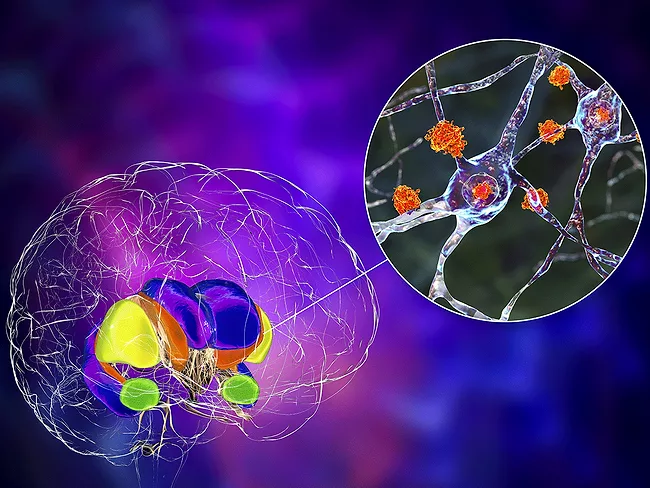
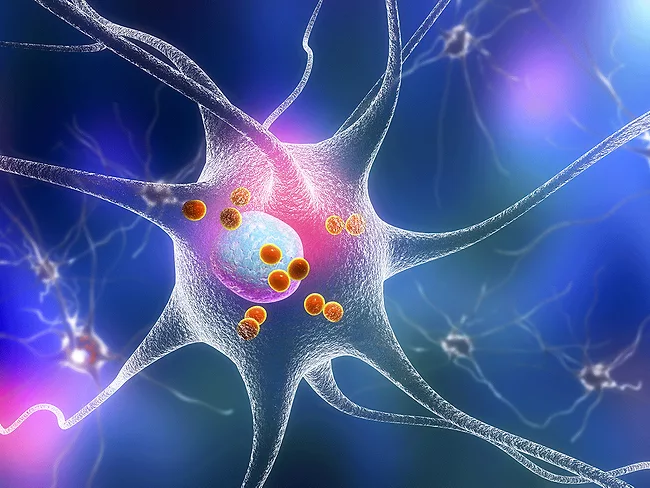
The University of Oxford and Selvita SA have established an integrated drug discovery collaboration in the area of Parkinson’s disease. Based on evidence implicating α-synuclein aggregates as the cause of Parkinson’s, the approach looks at the inability of cells to efficiently clear these aggregates, which may lead to the death of neurons and the emergence of characteristic symptoms of the disease. Promoting the ability of nerve cells to rid themselves of these aggregates therefore offers a possible therapeutic strategy for Parkinson’s disease.
Psychedelic drugs could have two distinct overlapping effects based on their affinity for two receptors involved in neuronal plasticity. Scientists at the University of Helsinki have observed that lysergic acid diethylamide (LSD) and psilocin (a drug isolated from the mushroom Psilocybe mexicana) have an antidepressant effect that is independent of their hallucinogenic outcome. These two different pathways are established through their binding to the tyrosine kinase receptor (TrkB), which has an antidepressant nature, or to the serotonin receptor, with a hallucinogenic activity.
Vanda Pharmaceuticals Inc.'s antisense oligonucleotide (ASO) VCA-894A has been awarded orphan drug designation by the FDA for the treatment of Charcot-Marie-Tooth disease, axonal, type 2S (CMT2S), caused by cryptic splice site variants within IGHMBP2.
α-Synucleinopathies constitute a set of neurological disorders including Parkinson’s disease (PD), dementia with Lewy bodies, multiple systems atrophy (MSA), and other rare disorders. The development of positron emission tomography (PET) tracers for imaging α-synuclein aggregates is essential for performing efficient and accurate diagnosis, tracking disease progression and monitoring efficacy of potential therapies.