μ-Opioid receptor agonists have been described in a Miralogx LLC patent as potentially useful for anesthesia and sedation and the treatment of anxiety disorders, asthma, depression and pain.
Aquinnah Pharmaceuticals Inc. has identified new TAR DNA-binding protein 43 (TARDBP; TDP-43) aggregation and microtubule-associated protein tau (PHF-tau; MAPT) aggregation inhibitors reported to be useful for the treatment of amyotrophic lateral sclerosis (ALS) and Alzheimer’s disease.
Khalifa University and The University of Queensland presented preclinical data for a novel acid-sensing ion channel 1 (ASIC1) inhibitor, Hi1a, evaluated in models of multiple sclerosis (MS).
The adenosine A1 receptor (A1R) modulates ionic conductance in neuronal membrane and contributes to the anticonvulsant and neuroprotective role of the endogenous neuromodulator adenosine. Because A1Rs are present all throughout the body, the development of A1R modulation as antiseizure strategy may face difficulties such as side effects in the heart or other organs.
It has been previously demonstrated that intranasal treatment with COG-201, an AAV9-shRNA designed to target the down-regulation of the 5-HT2A receptor, significantly decreased anxiety and improved memory in mice and rats.
The increasing knowledge on how protein tau is organized in live cells has shown that the protein forms nanometer-sized hotspots which are different from tau microtubules. These hotspots, essential for aggregation, include (306)VQIVYK(311) and (275)VQIINK(280) aggregation-promoting hotspots, the first found in all tau isoforms and the latter included mainly in 4R isoforms.
Researchers in the U.K. have succeeded in reverse engineering the defective cryptic splicing that drives amyotrophic lateral sclerosis (ALS) and frontotemporal dementia (FTD) to enable precisely targeted delivery of transgenes and therapeutic protein expression in diseased neurons. The technique is compatible with conventional adeno-associated viral vectors that are approved for gene therapy, and can readily be adapted for different transgenes. ALS, FTD and other neurogenerative diseases are underpinned by loss of function of the RNA-binding protein TDP-43 (transactive response DNA-binding protein 43), that normally functions as a key regulator of splicing, protecting the transcriptome from toxic cryptic exons.
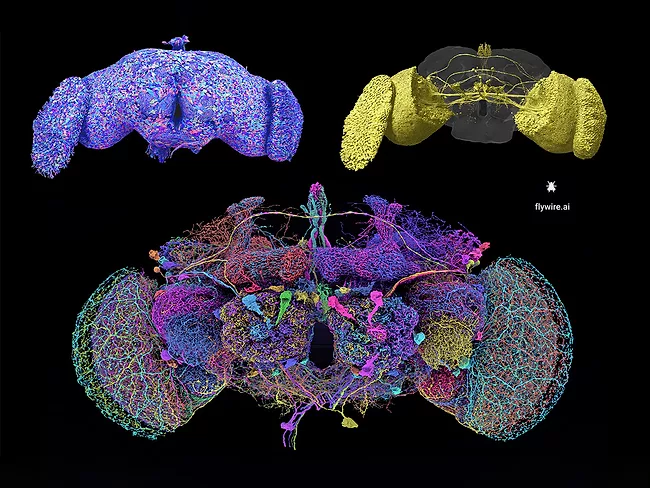
A collaboration led by the Flywire Consortium and comprising hundreds of scientists has completed a whole map of the adult fruit fly brain after several decades of collaborative work. By using electron microscopy and three-dimensional reconstruction supported by AI tools, the researchers have revealed the neural wiring of the Drosophila melanogaster brain, a connectome of 140,000 neurons with 50 million synaptic connections. In the future, researchers could possibly use this map as an artificial in silico model to study the brain as a simulator through its connections, though a lot of work remains to be done for this.
Researchers at QPS Clinical Services GmbH and Universitat de Barcelona have divulged dual bifunctional epoxide hydrolase 2 (EPHX2; sEH) and glutaminyl-peptide cyclotransferase-like protein (QPCTL; IsoQC) inhibitors reported to be useful for the treatment of Alzheimer’s disease.